
Your photo as a scene from a Japanese handscroll
A painted paper scroll of Japan around 1200, read a short length at a time: small figures seen from above, in flat colour under fine ink lines. Erafy paints you into such a length.

AI photo app · Free to download · iPhone · 18+

Nobody in the examples is a real person — the before photos are invented faces. These are our best results, not average ones. Sometimes AI can't handle it and modifies your face. All we can offer is a try.
What a Japanese handscroll was
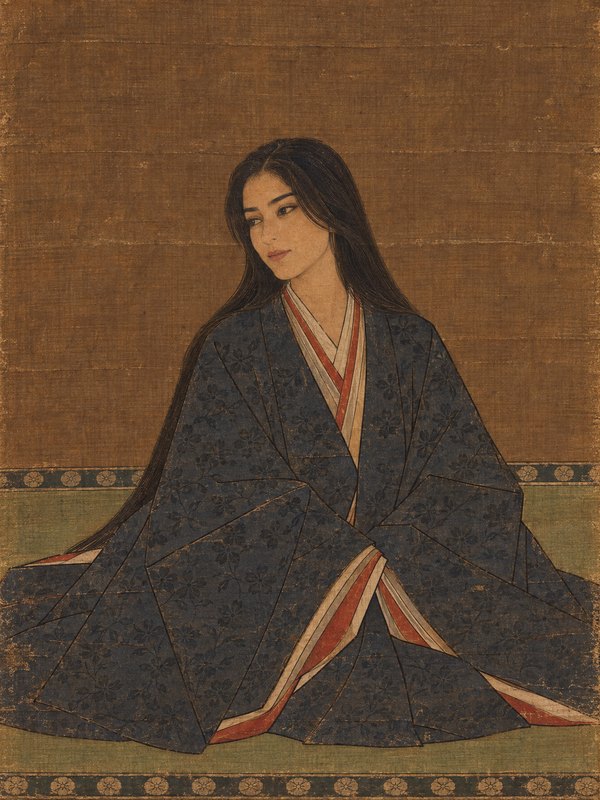
A handscroll, or emaki, is a strip of paper a forearm high and up to a dozen metres long. It was unrolled from right to left, an arm's length at a time, so nobody ever saw the whole scroll at once. Its great age was the twelfth and thirteenth centuries.
The coloured manner is built in three steps: a light ink drawing, opaque mineral colour laid flat over it, then the lines drawn again over the dry paint. Everything is seen from high above, rooms with the roof lifted off; there is no horizon and no sky, and the people are small, a head a thumbnail across. A face is a stroke for each eye and a hook for the nose, so nobody has an expression; the reader supplies the feeling.
Erafy paints you into a length of such a scroll, whole and small on the paper. The paint has cracked and flaked in islands; the ink lines float where the colour has gone. At this size a figure barely holds a person: expect your build and hair colour, and who stood beside you, not a likeness. With Situation on, you might be at a game of go on a veranda or a picnic under cherry trees.
For a face, try the Japanese likeness portrait.
More pictures
-
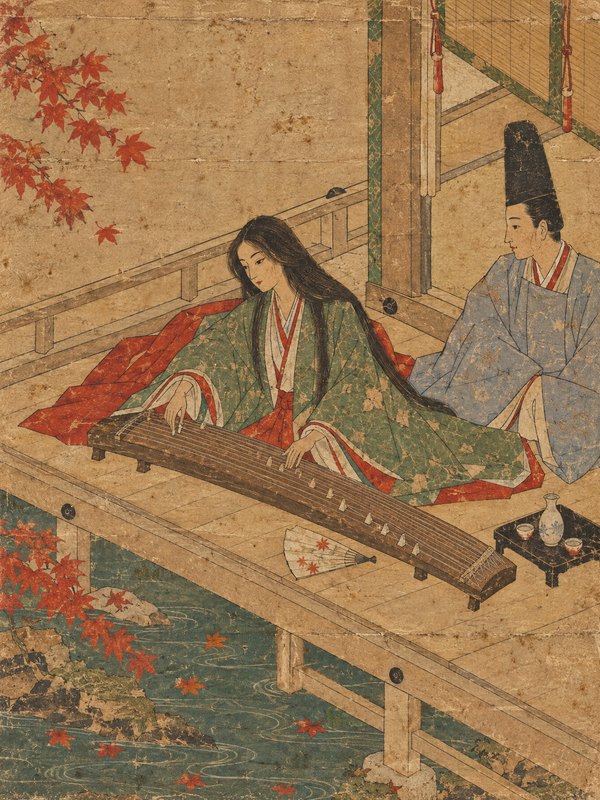 Playing the koto
-
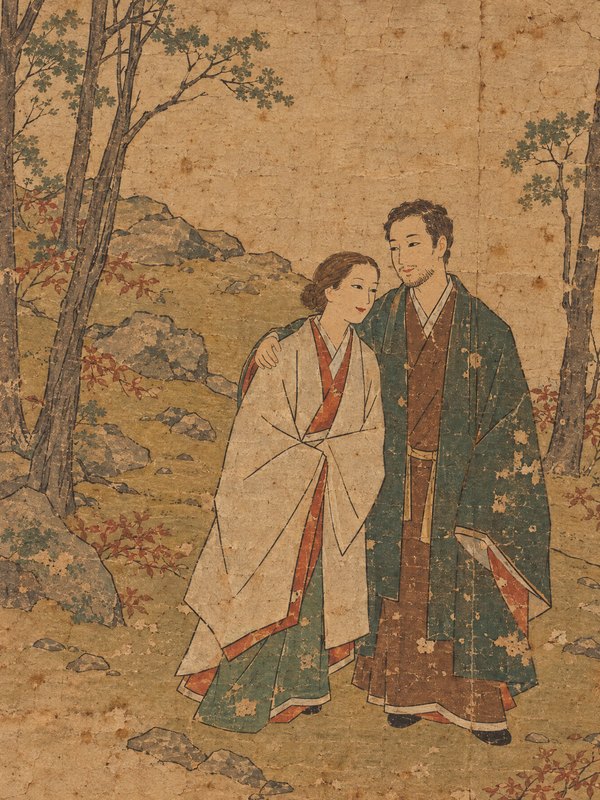 A couple
-
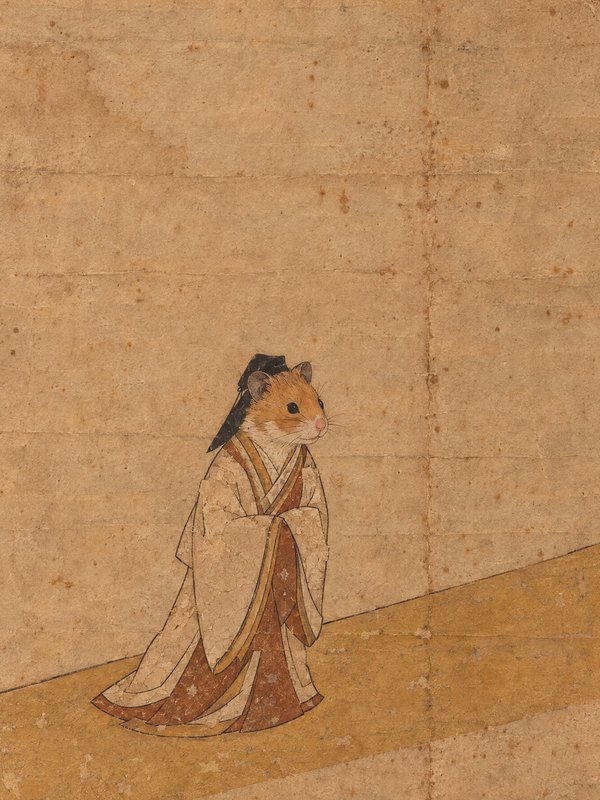 A hamster as a person


Other crafts: Panel, silk and thread
-
 Fayum mummy portraitAD 150
-
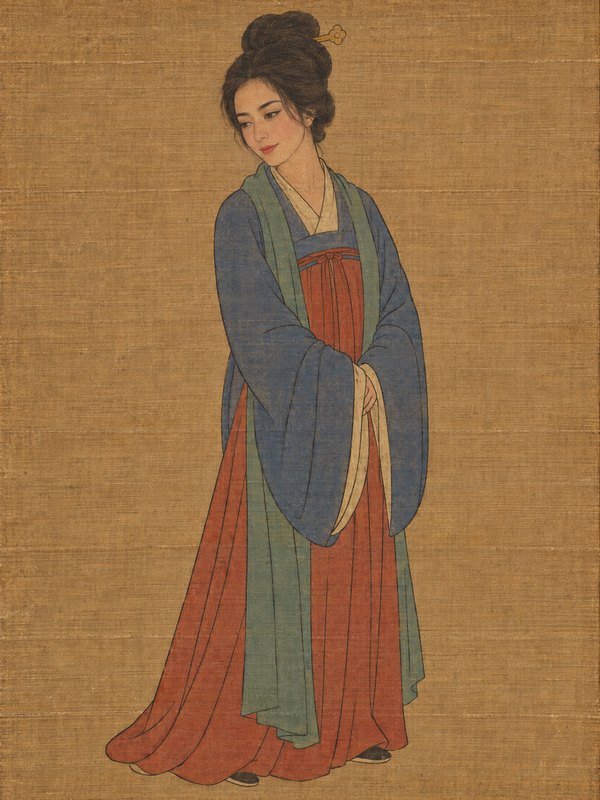 Tang court paintingAD 750
-
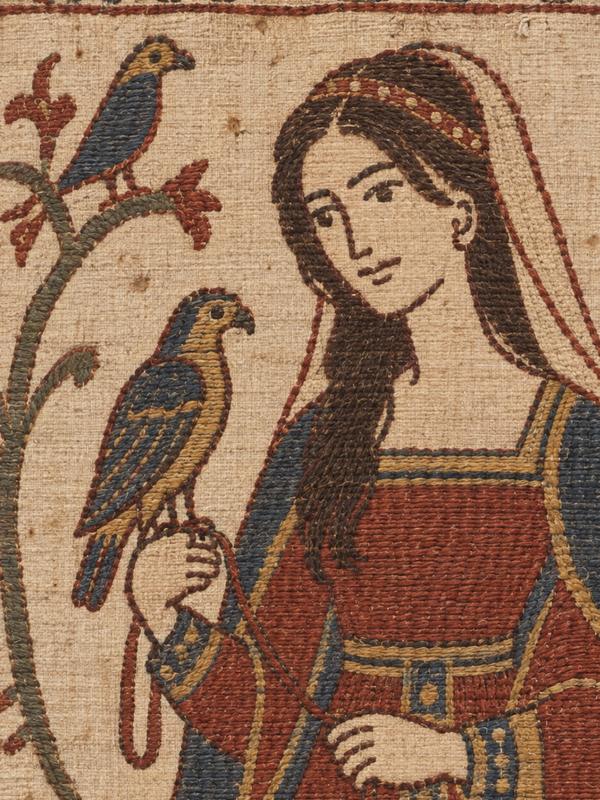
-


Questions
What does emaki mean?
A painted handscroll: a horizontal roll of paper, usually thirty to forty centimetres high and up to a dozen metres long, that alternates passages of text with painting and is read from right to left with only about sixty centimetres open at a time.
Why do handscroll faces have no expression?
The coloured manner drew every face the same way, a stroke for the eye and a hook for the nose, a convention called hikime kagibana. Nobody in the picture shows a feeling; the reader brings it. The other manner, in ink line alone, went the opposite way, with rabbits, frogs and monkeys wrestling and bathing in fast brushwork, and is counted among the ancestors of manga.
What would I look like in a Japanese handscroll?
Erafy makes a new picture from your photo in the style of the year you pick, so how much it resembles you varies from one go to the next. It varies most in the black-and-white years and in the crafts before 1900, where faces are drawn in the craft's style. We make no promise about how any result will look.
