
You, seated for a Japanese likeness portrait
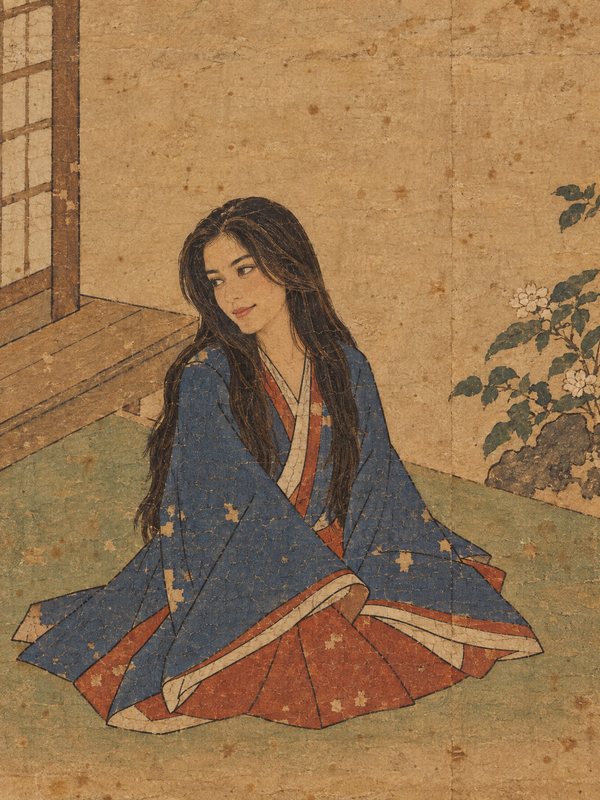
The formal seated portrait of Japan's court and warrior houses, painted on silk around 1340: a body reduced to geometry and a face that is not. Erafy seats you the same way.

AI photo app · Free to download · iPhone · 18+

Nobody in the examples is a real person — the before photos are invented faces. These are our best results, not average ones. Sometimes AI can't handle it and modifies your face. All we can offer is a try.
What a Japanese likeness portrait was
Nise-e means likeness pictures: the formal portraits that the court and the warrior houses of Japan had painted of their own people, in ink and colour on silk, from the twelfth to the fourteenth century. Few are securely dated.
The body is geometry and the face is not. The court robe, stiff with starch, spreads into a broad flat triangle of black or dark patterned colour with no body evident inside it. Above it the head is small and closely observed: individual eyebrows, a specific jaw, a specific mouth, drawn in a few weighted ink strokes over a flat fill of skin colour. The contrast is the style.
Erafy seats you on a raised mat, upright, turned a quarter away, in a dark robe patterned in its own shade, under a black lacquered cap or with long hair down the back. The craft existed to make a particular person recognisable, so it can hold the set of the features as a handful of ink marks, though how much of yours comes through varies from one go to the next; the expression, the haircut and the pose do not come with you. With Situation on, the occasion might be a poetry contest or the autumn moon viewing.
For a scene rather than a sitting, see the Japanese handscroll.
More pictures
-
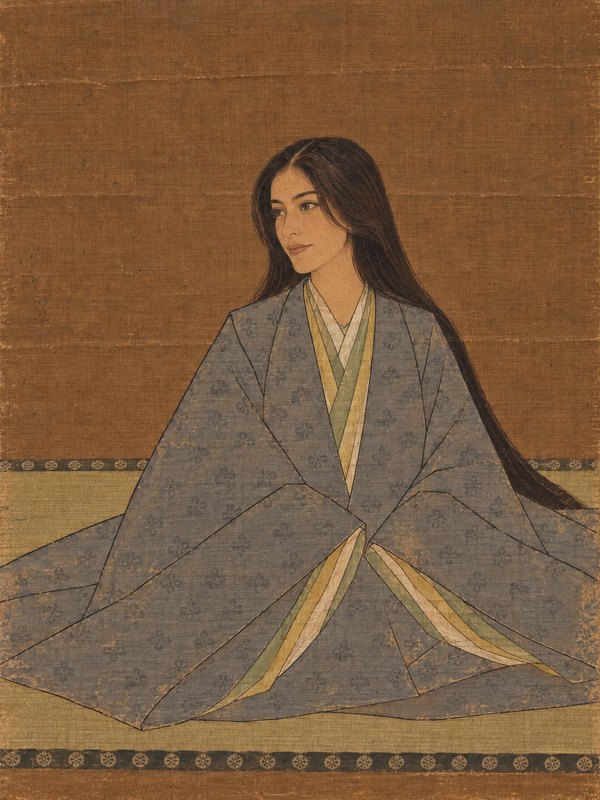 Seated in court robes
-
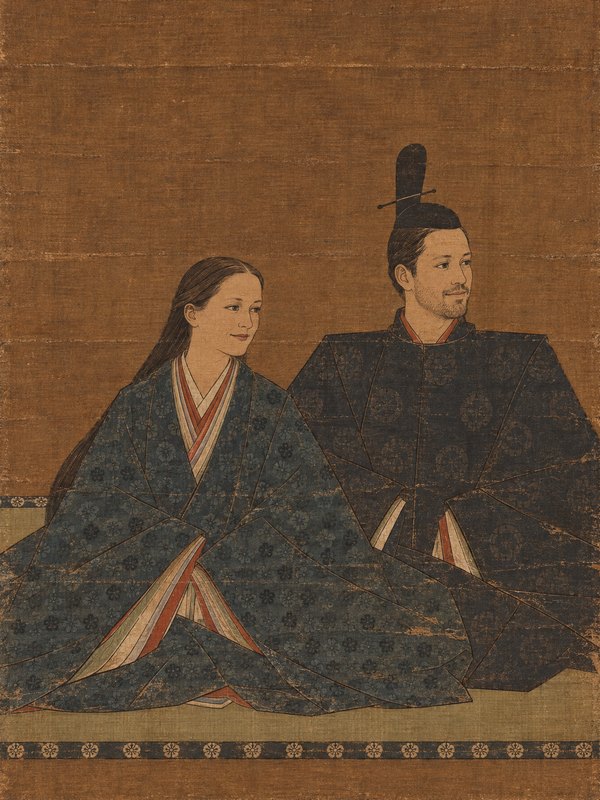 A couple
-
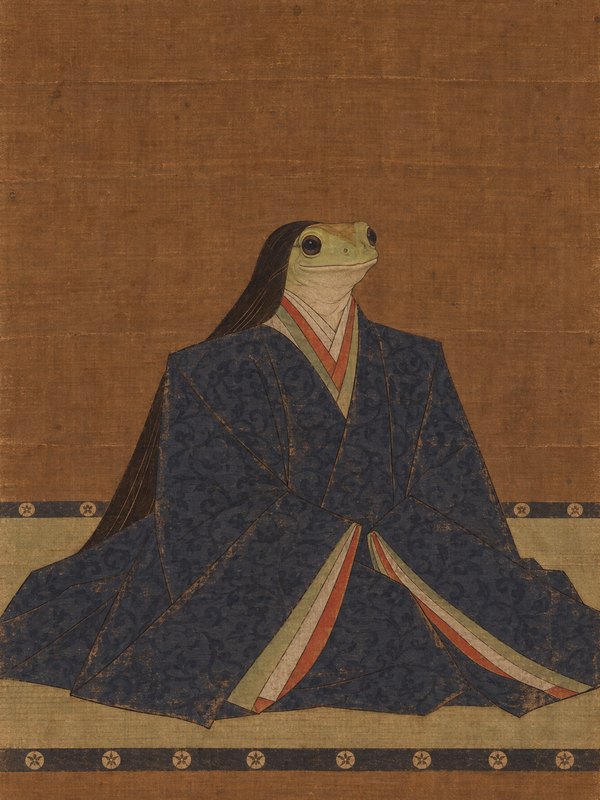 A tree frog as a person


Other crafts: Panel, silk and thread
-
 Fayum mummy portraitAD 150
-
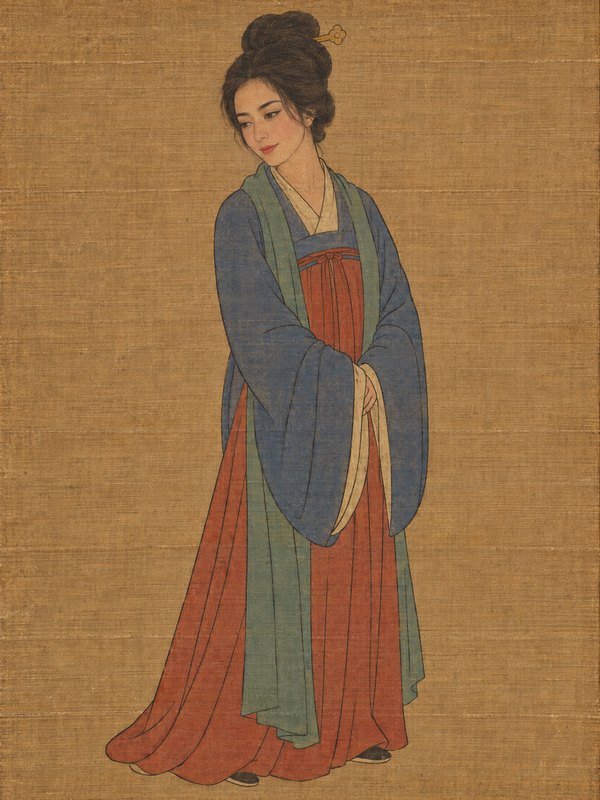 Tang court paintingAD 750
-
-


Questions
How was a nise-e portrait made?
In stages, on fine silk sized and stretched. The painter first drew the sitter's features in a few weighted ink lines, with no correction; then the colour went on in flat opaque fills that follow the drawing; then the drawing was laid again in fine ink on top. Unpainted ink drawings of courtiers survive from the same tradition, the face carried by a few strokes, and they show what the colour was laid over.
Why are the robes so large and the head so small?
The court robe was stiff with starch and stood away from the body, so a seated sitter became one broad flat shape of dark colour, spread six or seven face-widths across, and the painter's labour went into its planes, fold lines and woven pattern. The head above it was the plainest passage, a few lines on a flat fill, drawn to record a particular person rather than to show light on a face.
What would I look like in a Japanese likeness portrait?
Erafy makes a new picture from your photo in the style of the year you pick, so how much it resembles you varies from one go to the next. It varies most in the black-and-white years and in the crafts before 1900, where faces are drawn in the craft's style. We make no promise about how any result will look.
