
You, cut into an Assyrian palace wall
Along the halls of the Assyrian palaces at Nimrud, Nineveh and Khorsabad ran slabs of soft pale stone carved a finger deep, around 700 BC. Erafy carves a new picture of you into that stone, chisel-width lines and all.

AI photo app · Free to download · iPhone · 18+

Nobody in the examples is a real person — the before photos are invented faces. These are our best results, not average ones. Sometimes AI can't handle it and modifies your face. All we can offer is a try.
What an Assyrian palace relief was
The stone is gypsum alabaster, pale and soft enough to work with copper and bronze chisels and a bow drill. Slabs about two metres tall lined the halls, carved only a finger deep above an empty ground. One stone makes face, cloth and ground alike, so nothing differs in colour or finish.
Relief this shallow cannot turn a form, so each part is given in its widest view: head and legs in profile, shoulders squared, the eye an almond cut frontally with a drilled hole for the pupil. Hair and beard are rows of tight drilled curls, a cheek is bare stone, a mouth a single cut. The carvers cut no expression. Of a person this stone can hold the set of nose and jaw, the hair and the build, while animals were carved with far closer observation.
The result is a new picture, carved rather than filtered, on a slab dug from the burnt ruin of its wall: chipped, cracked, a trace of black paint in the deepest cuts. With Situation on you stand in a scene, a harpist at a garden feast or a couple picking grapes on a hillside. The carvers watched animals more closely than people, so a pet shown as a person keeps its own carved animal head.
More pictures
-
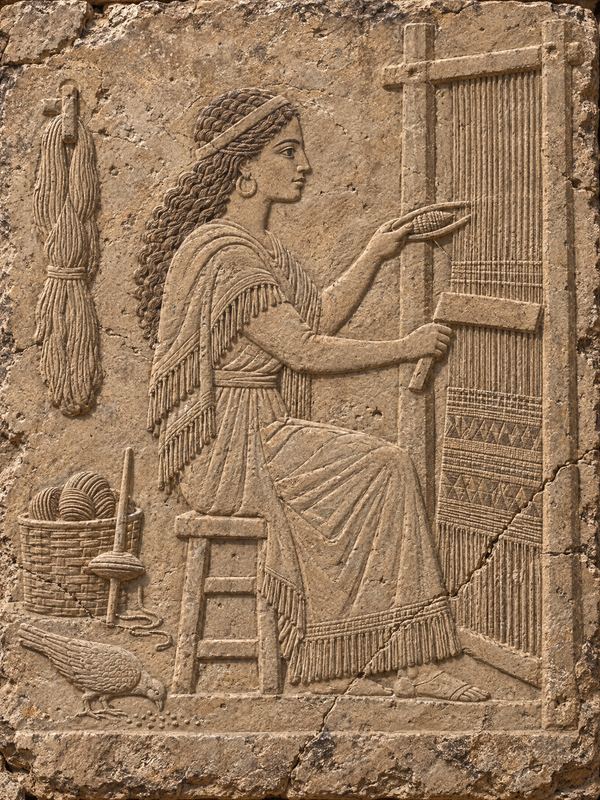 At the loom
-
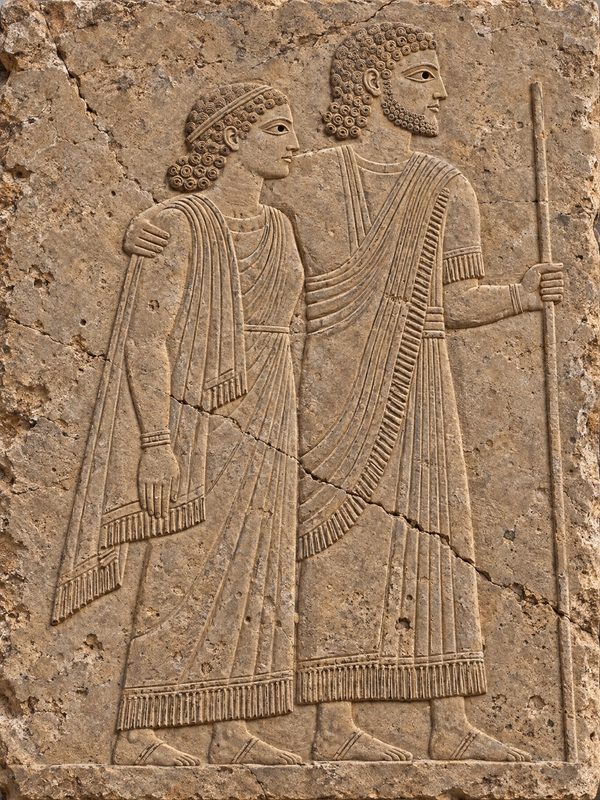 A couple
-
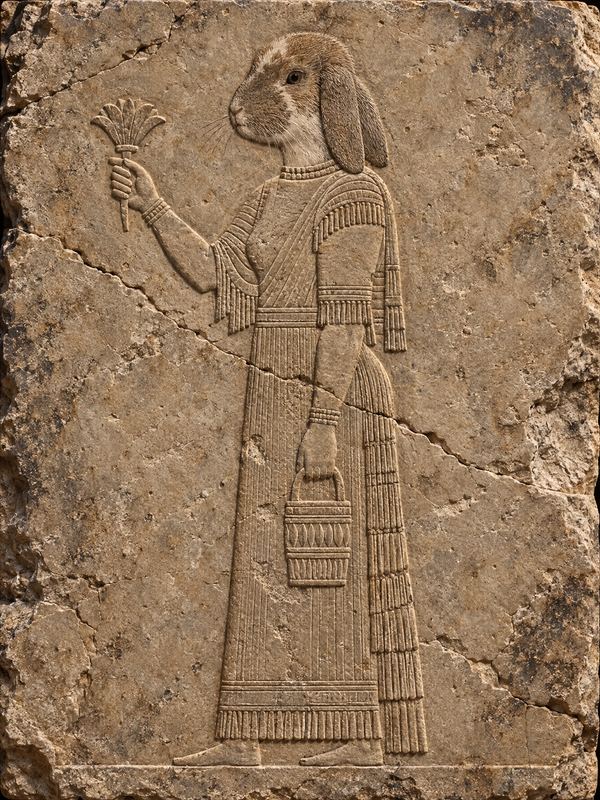 A lop bunny as a person


Other crafts: Stone and clay
-
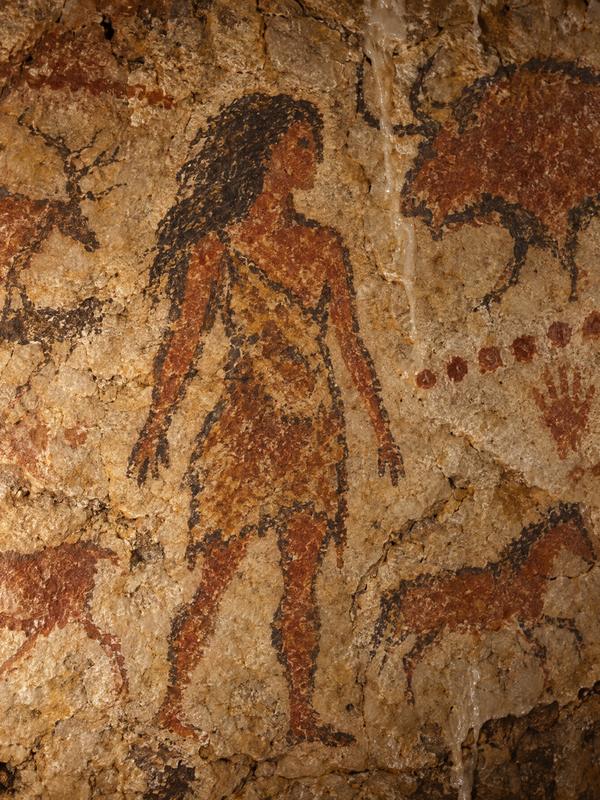 Cave paintingaround 15,000 BC
-
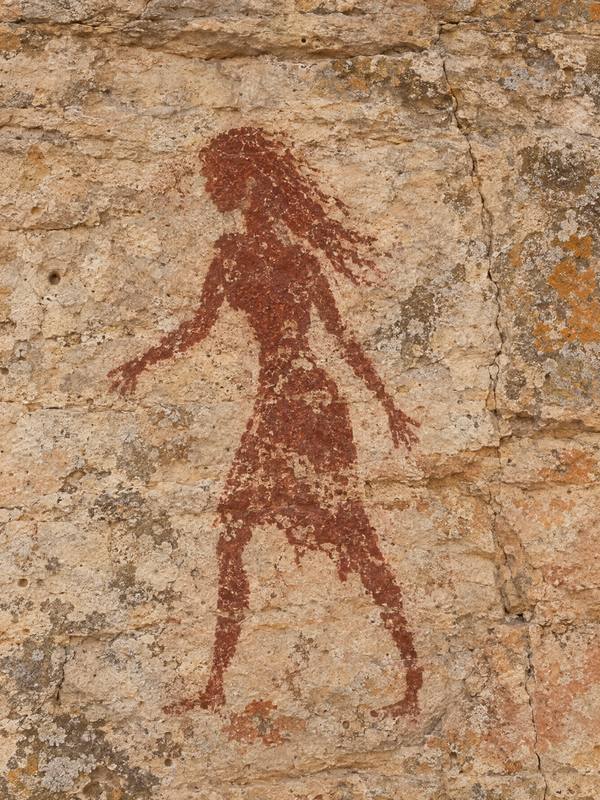 Levantine rock artaround 6000 BC
-
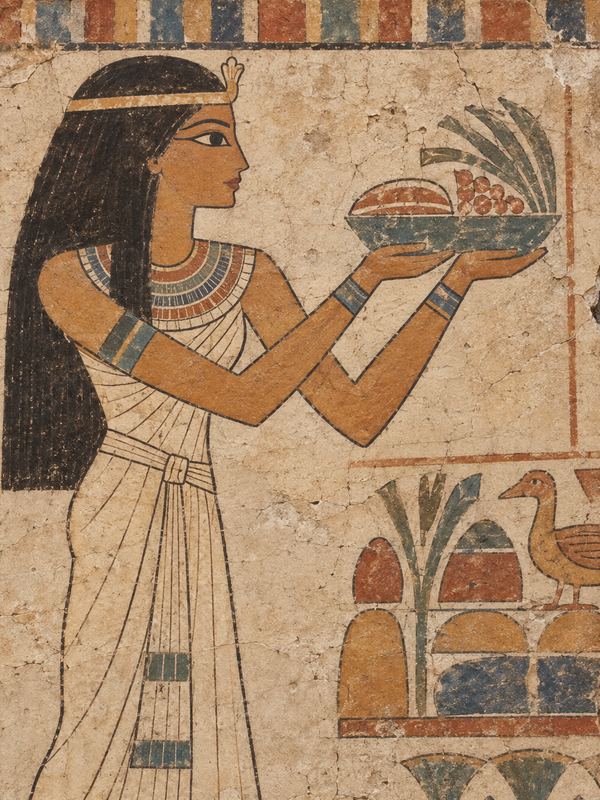 Egyptian tomb paintingaround 2400 BC
-
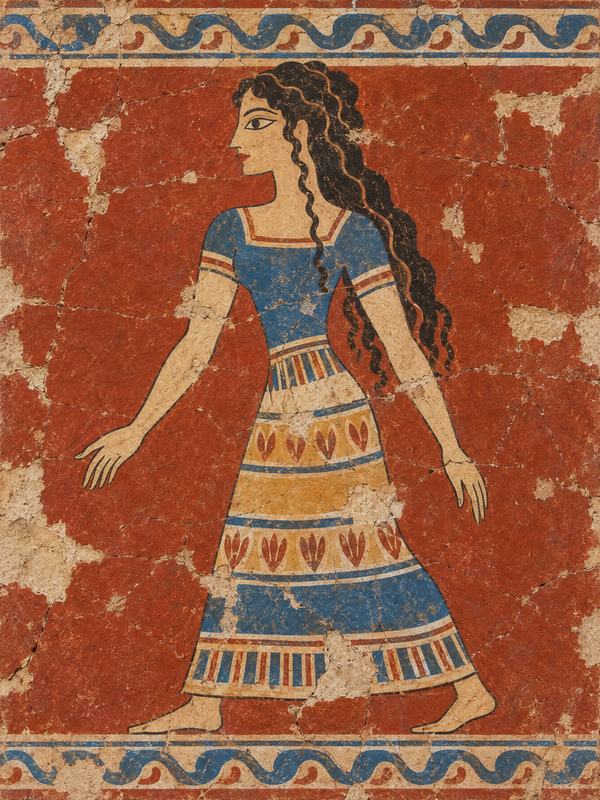 Minoan frescoaround 1600 BC
-
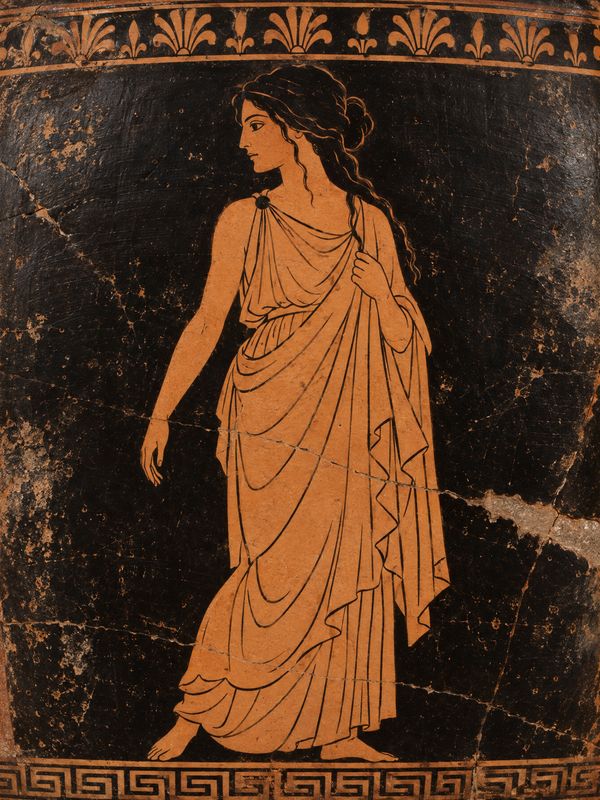 Greek vase paintingaround 450 BC
-
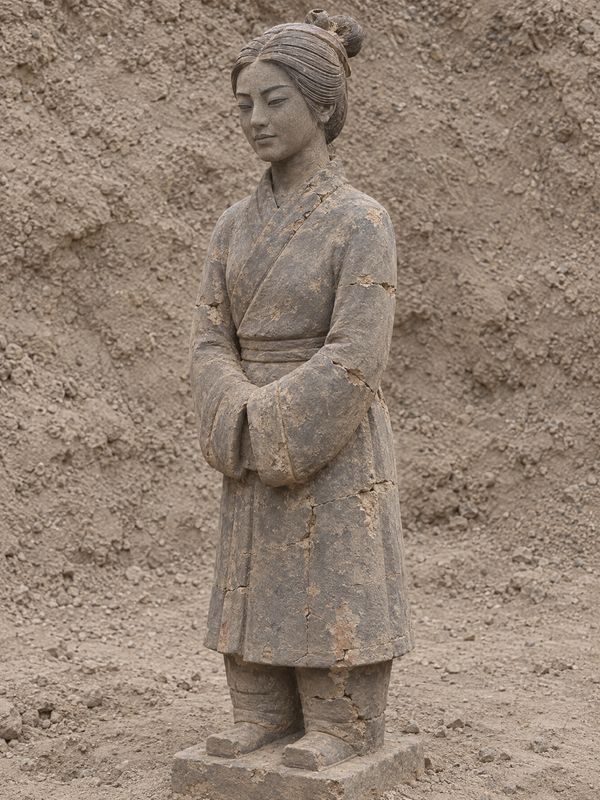 Terracotta armyaround 220 BC


Questions
Were Assyrian reliefs painted?
At least in part: black for hair and beards, white for the eyes, and other colours elsewhere. The grey and buff of the slabs in museums is damage, not design; the palaces burnt, and the paint went with them. Erafy's version follows the slabs as they were found, with only faint black traces caught in the deepest cuts.
Where did Assyrian palace reliefs come from?
From the palaces of northern Mesopotamia, in what is now northern Iraq, at Nimrud, Nineveh and Khorsabad, carved between about 879 and 612 BC. The slabs ran as a continuous strip along the walls of the halls and were read left to right like a story, with cuneiform cut straight across the picture. The kings in them were told apart by that inscription, not by their faces.
What would I look like in an Assyrian palace relief?
Erafy makes a new picture from your photo in the style of the year you pick, so how much it resembles you varies from one go to the next. It varies most in the black-and-white years and in the crafts before 1900, where faces are drawn in the craft's style. We make no promise about how any result will look.
