
Your photo on the wall of an Egyptian tomb chapel
Around 2400 BC, the chapels of Egyptian tombs were painted in flat mineral colour inside an even black line, every body built by a fixed rule. Erafy makes a new picture of you on that plaster, by that rule.

AI photo app · Free to download · iPhone · 18+

Nobody in the examples is a real person — the before photos are invented faces. These are our best results, not average ones. Sometimes AI can't handle it and modifies your face. All we can offer is a try.
How an Egyptian tomb painting was made
The wall was smoothed lime plaster in a chapel cut into rock. The painter ruled a grid of thin red guide lines, then drew with a reed brush in mineral pigments mixed with plant gum: red and yellow ochre, white gypsum, carbon black, a green from malachite and a blue frit. Every shape is closed with a black contour and filled with one flat colour; there is no shading anywhere.
The convention is a rule about drawing, not about bodies: each part is drawn from the view that identifies it and joined without a turn, head in profile with the eye seen from the front, shoulders square on, hips, legs and both feet in profile. Skin is one flat ochre, pale yellow or red-brown, and every face has the same level, unsmiling set. What can survive of a person is hair, build, colouring and what they were doing, redrawn by that rule.
The photo itself is not changed; Erafy builds a new painting from it on that plaster, crazed and flaked with age. With Situation on it places you in a register of the time: a game of senet, fish traded for bread at a market, a harpist at an evening feast. The Minoan fresco, eight centuries later, keeps the profile head and frees the line.
More pictures
-
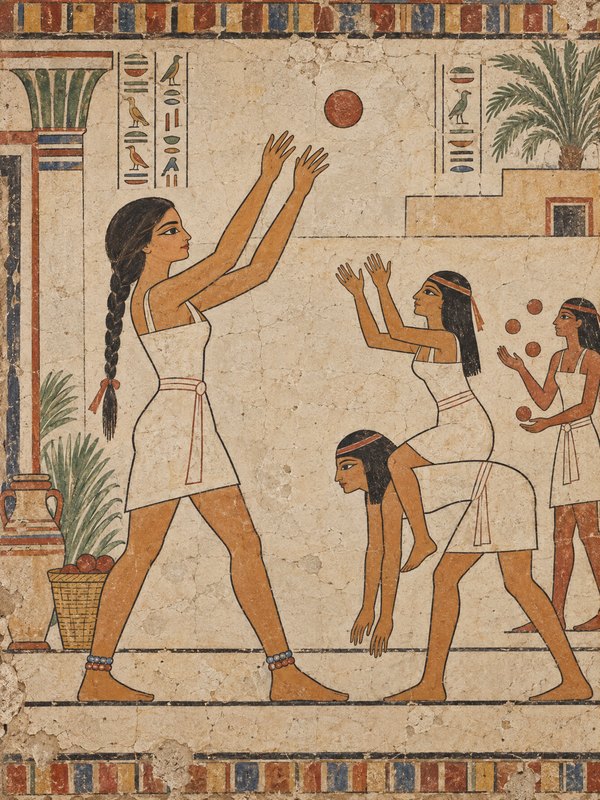 Playing ball
-
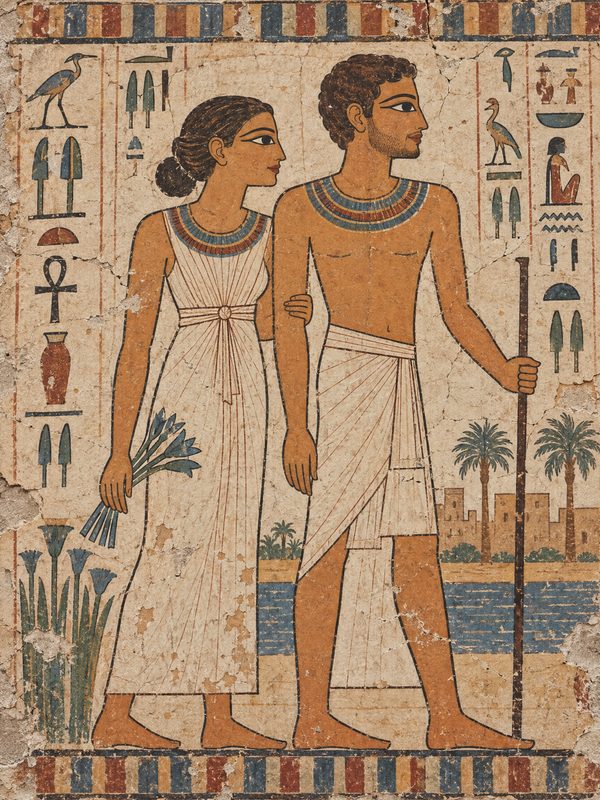 A couple by the river


Other crafts: Stone and clay
-
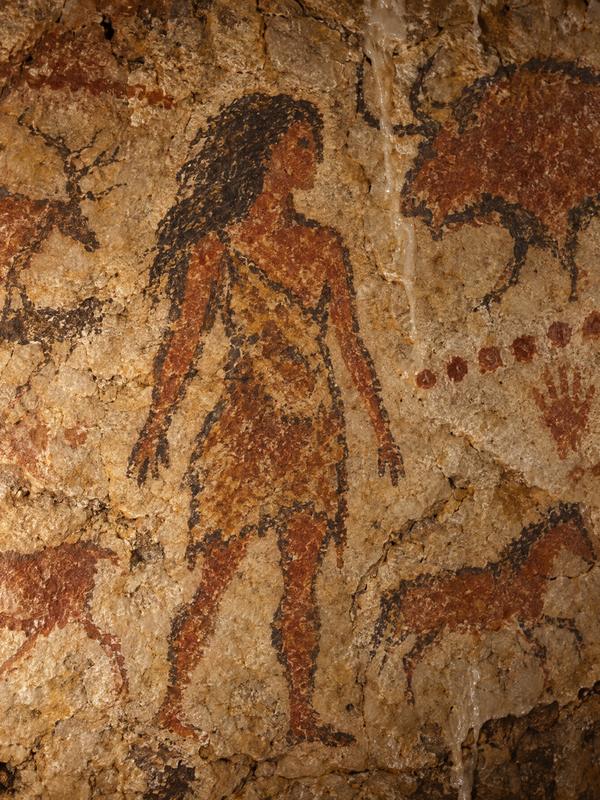 Cave paintingaround 15,000 BC
-
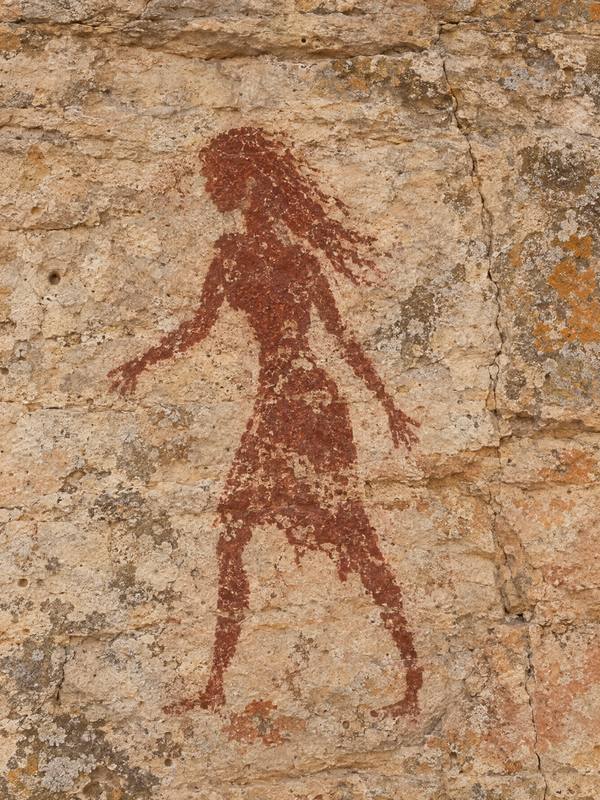 Levantine rock artaround 6000 BC
-
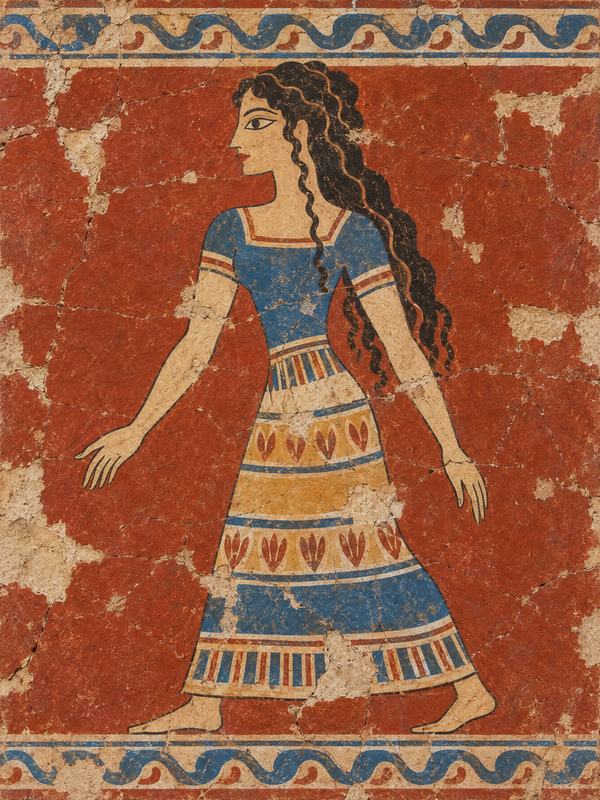 Minoan frescoaround 1600 BC
-
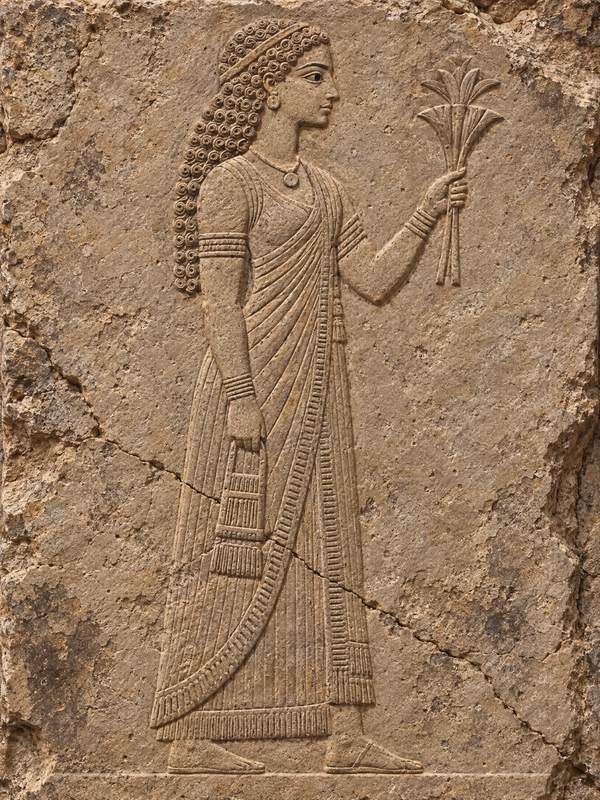 Assyrian palace reliefaround 700 BC
-
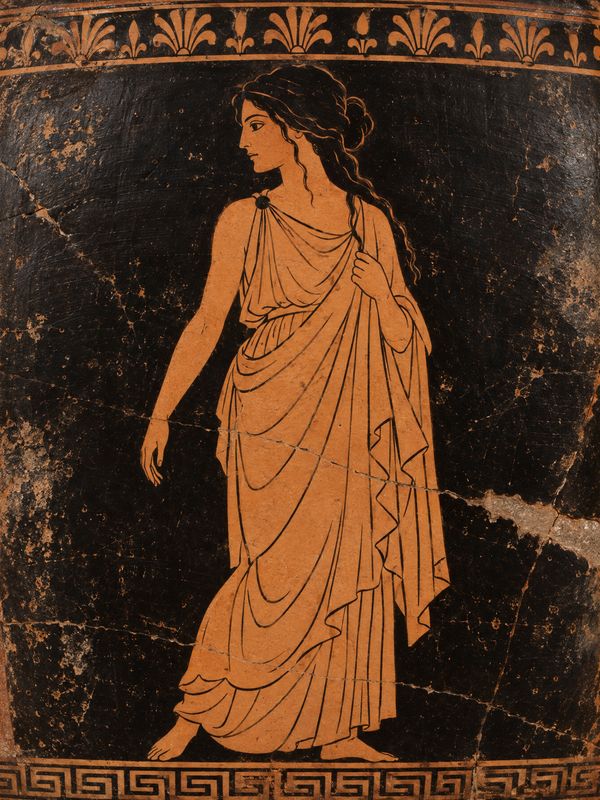 Greek vase paintingaround 450 BC
-
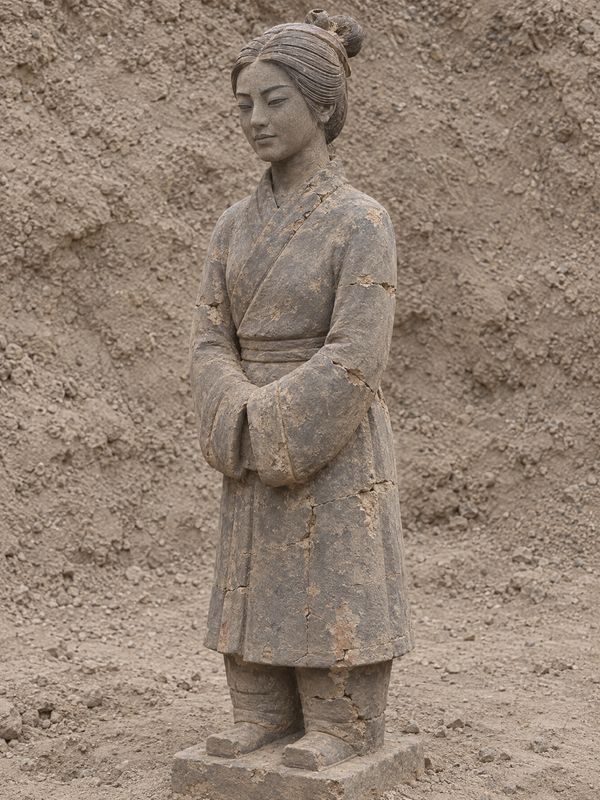 Terracotta armyaround 220 BC


Questions
Why are Egyptian figures drawn in profile with a front-facing eye?
Because the painter had no way to show a body turning in space. Each part is given from the view that identifies it: the head in profile, the eye in that head drawn as if seen from the front, the chest square to the viewer, the legs in profile again with both feet drawn from the inside edge. The parts are joined without a turn. It is a rule about drawing rather than about anatomy, and Egyptian painters kept to it for some three thousand years.
Why does Egyptian painting look so flat?
By choice. The painted geese from a Fourth Dynasty chapel at Meidum are flat, outlined and unshaded, and yet three different species can be told apart from their plumage, which is drawn as pattern rather than texture. The flatness is a convention, not a failure of observation: colour changes nowhere except at a brush line, and the cream of the plaster is the only space there is.
What would I look like in an Egyptian tomb painting?
Erafy makes a new picture from your photo in the style of the year you pick, so how much it resembles you varies from one go to the next. It varies most in the black-and-white years and in the crafts before 1900, where faces are drawn in the craft's style. We make no promise about how any result will look.
