
You on a painted plaster wall of Minoan Crete
Minoan painters worked on lime plaster in the houses and palaces of Crete and Thera: one flowing brushed line, flat colour inside it, a red or blue ground behind. Erafy makes a new picture of you in that manner, around 1600 BC.

AI photo app · Free to download · iPhone · 18+

Nobody in the examples is a real person — the before photos are invented faces. These are our best results, not average ones. Sometimes AI can't handle it and modifies your face. All we can offer is a try.
What a Minoan fresco was
The painter brushed mineral colour onto lime plaster, damp and dry. Six colours: black from shale, white from slaked lime, red from haematite, yellow ochre, blue from ground copper silicate, and a green mixed from the blue and the yellow. Each shape is a flat field of a single colour inside a contour brushed in one movement, so a limb is one long curve, on a plain red or blue ground.
Nothing is shaded and nothing casts a shadow; the movement is in the line. A head is in profile with a frontal eye, the nose one line continuing the brow, the mouth two red strokes, the hair a solid black mass of ripples and curls. Skin is white or red-brown by convention. A face comes out level and composed, and a person can be carried only by build, dress and the outline of the hair, black whatever its colour was.
Rather than tinting your photo, Erafy paints a new wall from it and ages it: the plaster fell with its building, lay in rubble and ash, and is pieced together again. With Situation on you join an island scene: gathering saffron crocus on a hillside, or supper on a flat roof at dusk. The skin convention is borrowed from Egyptian tomb painting, and pushed further.
More pictures
-
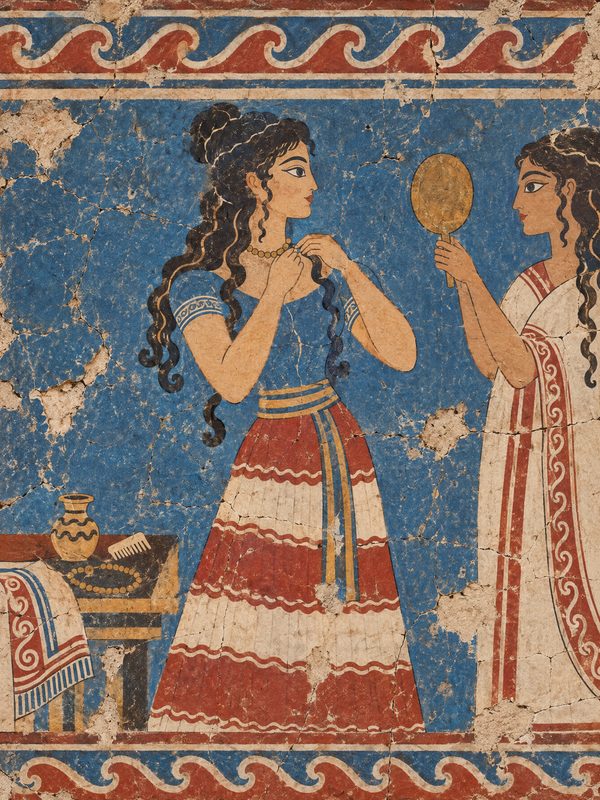 Getting ready
-
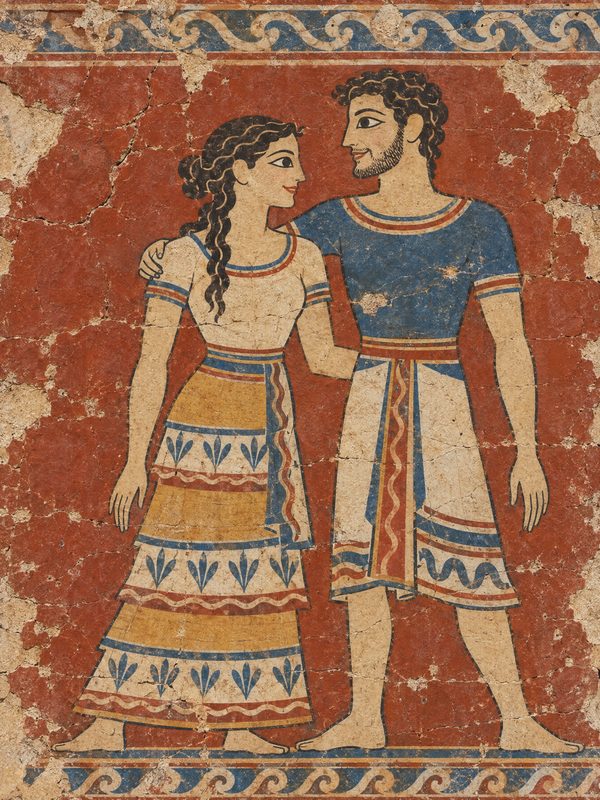 A couple
-
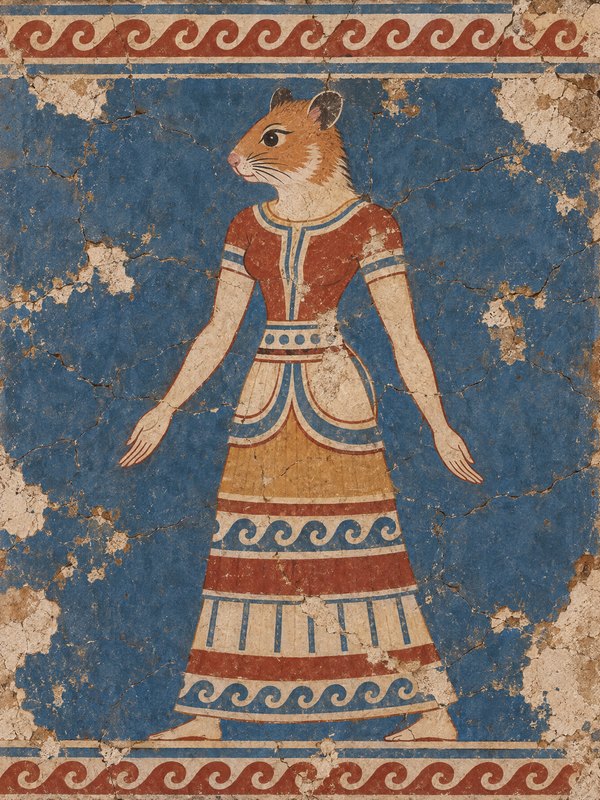 A hamster as a person


Other crafts: Stone and clay
-
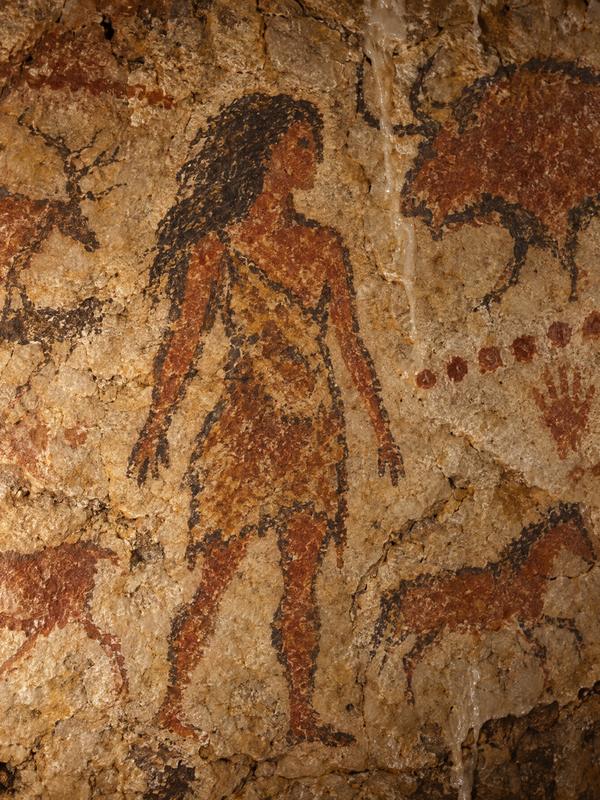 Cave paintingaround 15,000 BC
-
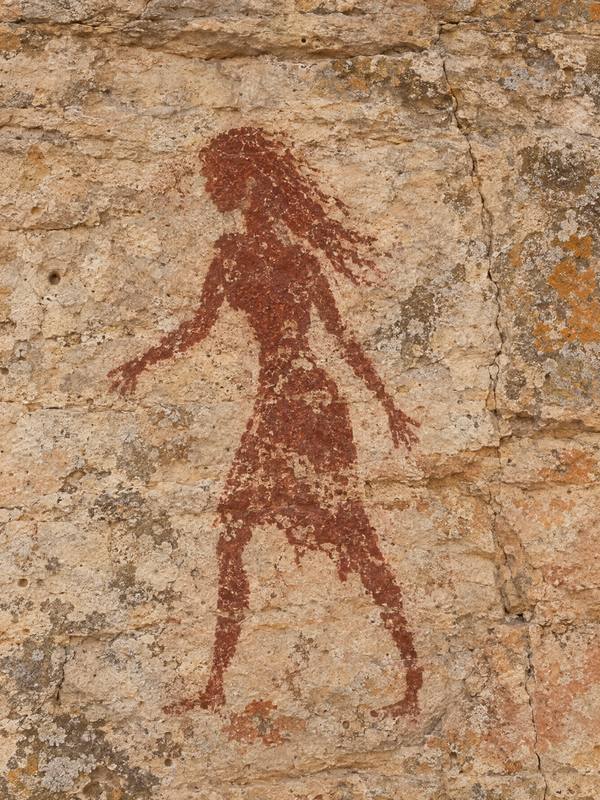 Levantine rock artaround 6000 BC
-
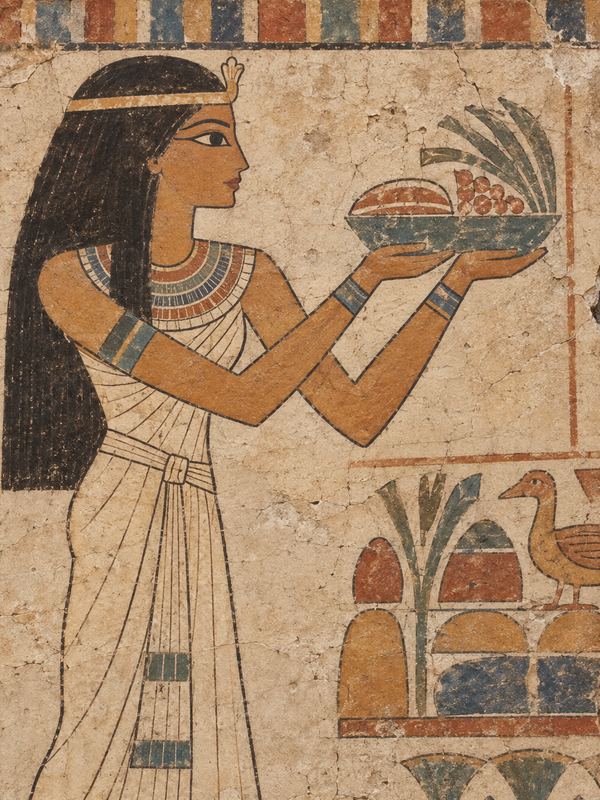 Egyptian tomb paintingaround 2400 BC
-
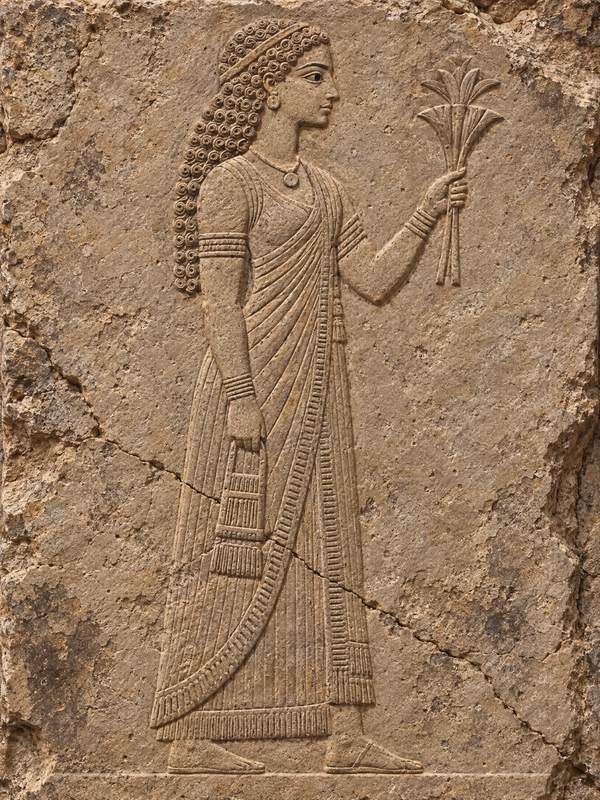 Assyrian palace reliefaround 700 BC
-
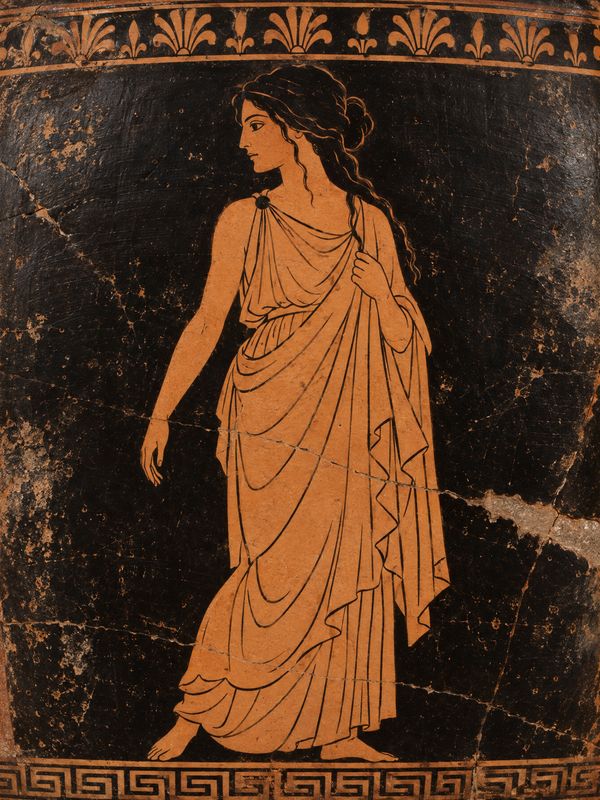 Greek vase paintingaround 450 BC
-
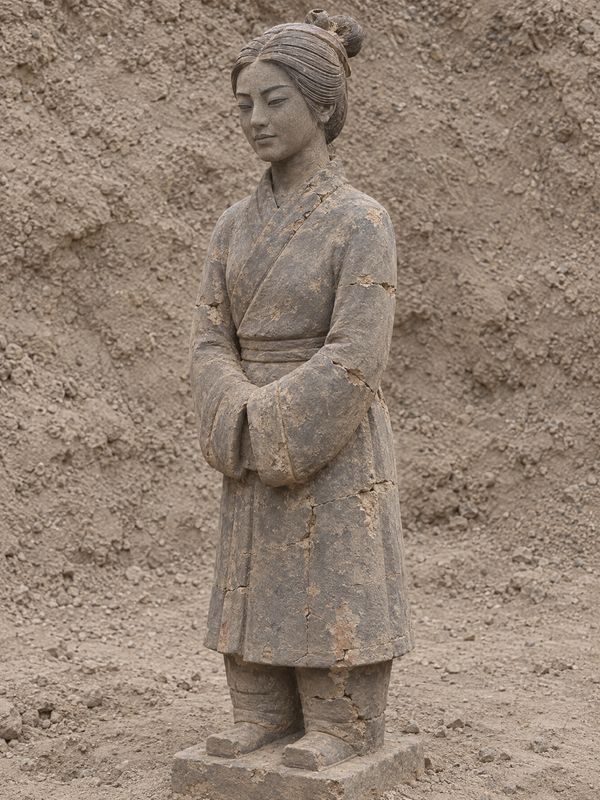 Terracotta armyaround 220 BC


Questions
Which Minoan frescoes survive?
The paintings from Akrotiri on Thera survive far better than anything on Crete, because the eruption of Thera around 1600 BC buried the town; the two boxing boys from Akrotiri are in the National Archaeological Museum in Athens. The Knossos frescoes, such as the bull-leaping panel in the Archaeological Museum of Heraklion, are heavily restored, and the restoration is a large part of what a visitor sees.
Is a Minoan fresco a true fresco?
That is still argued. Whether the Minoan painters worked on wet plaster, on dry plaster or on both is unsettled, and Erafy's version follows the mixed view, with pigment brushed on while the plaster was damp and again after it dried. Either way the look is the same: flat colour inside a flowing line, with nothing shaded and nothing receding.
What would I look like in a Minoan fresco?
Erafy makes a new picture from your photo in the style of the year you pick, so how much it resembles you varies from one go to the next. It varies most in the black-and-white years and in the crafts before 1900, where faces are drawn in the craft's style. We make no promise about how any result will look.
