
You, drawn on the belly of a Greek vase
Red-figure is the Athenian technique of around 450 BC: the figures left as bare orange clay, the ground painted in a slip that fires glossy black, every line brushed. Erafy draws a new picture of you on the curved clay that way.

AI photo app · Free to download · iPhone · 18+

Nobody in the examples is a real person — the before photos are invented faces. These are our best results, not average ones. Sometimes AI can't handle it and modifies your face. All we can offer is a try.
How Greek vase painting worked
The pot is thrown in iron-rich clay that fires orange. The painter leaves the figures as bare clay and brushes the ground with a slip that fires black, then draws the contour thickly, so the line stands proud as a ridge, and the finer lines in the same slip watered down, which fires golden brown. After a three-stage firing the picture holds three values and no fourth: matte orange, black gloss, golden brown.
A head is drawn in profile, the nose continuing the brow, the mouth small, closed and level whatever the photo's mouth was doing. Hair is one solid black shape; cloth is bare orange crossed by fold lines. The contour can carry the line of a brow, the set of nose and jaw, the shape of the head and the hair round it; for anything finer the pot has no mark.
This is not a filter laid over the photo. Erafy draws a new picture on a pot that lay in dry earth and was pieced together from its sherds, gloss scuffed, joins showing. Turn Situation off and the photo keeps its own pose; leave it on for a scene such as filling water jars at the fountain house or knucklebones on a step. The next craft in time is the Terracotta army.
More pictures
-
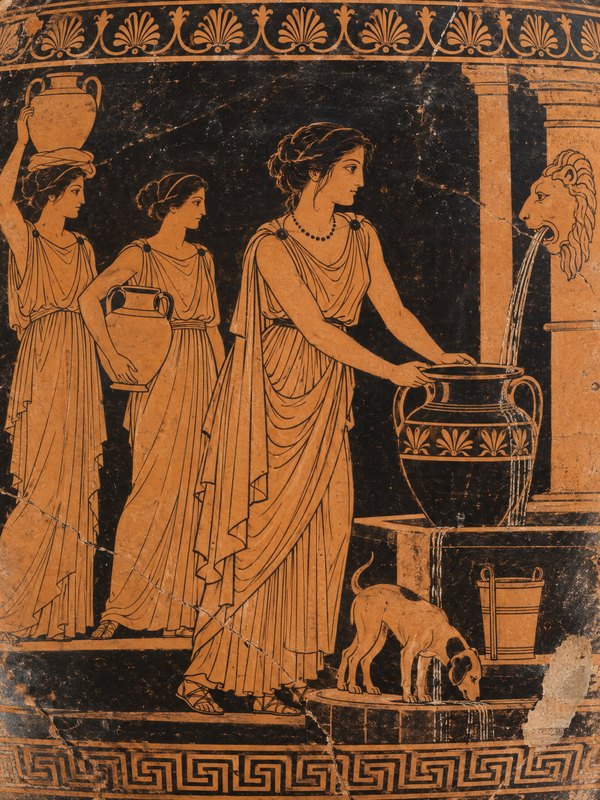 At the fountain
-
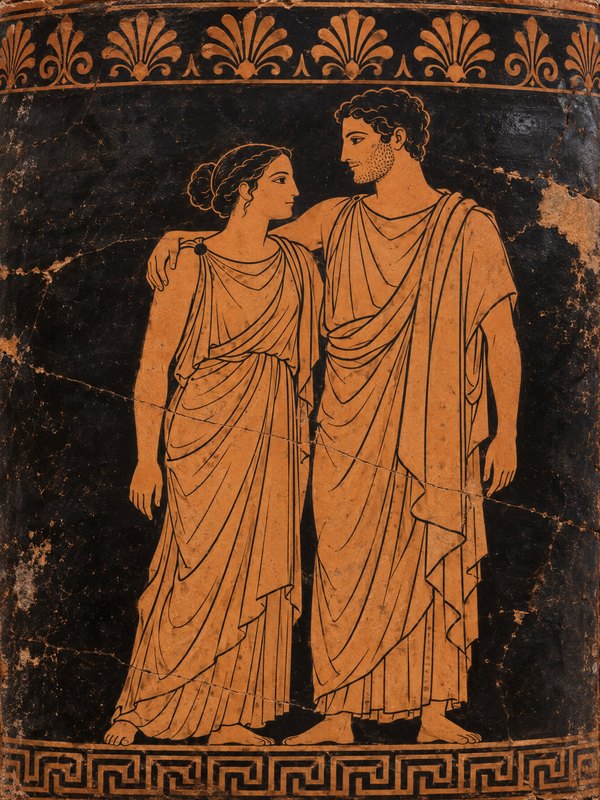 A couple
-
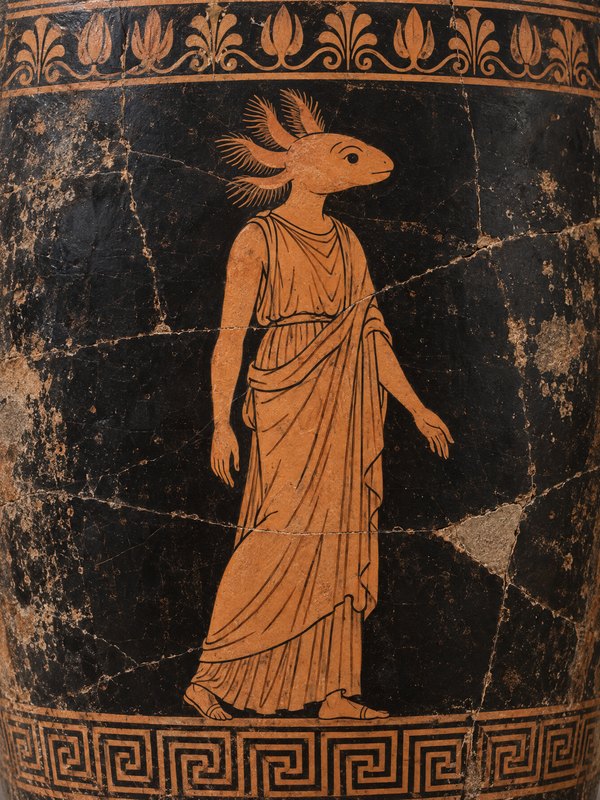 An axolotl as a person


Other crafts: Stone and clay
-
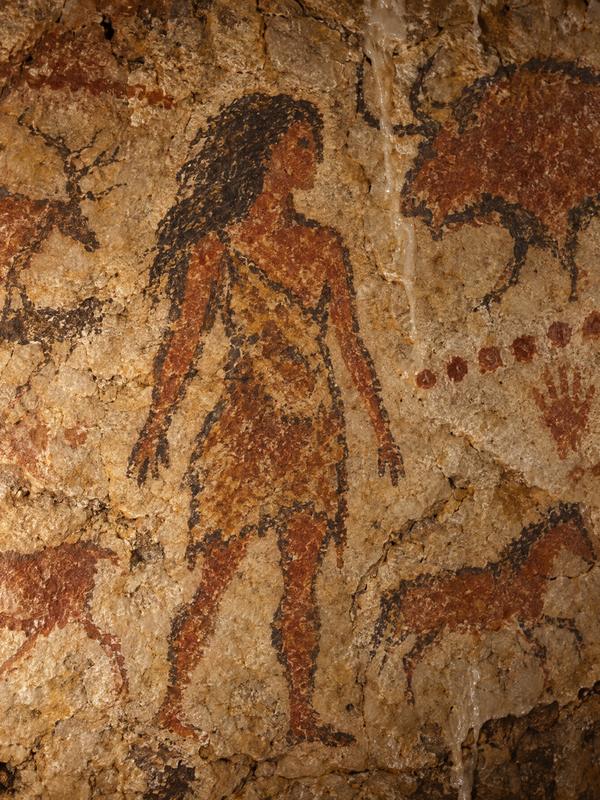 Cave paintingaround 15,000 BC
-
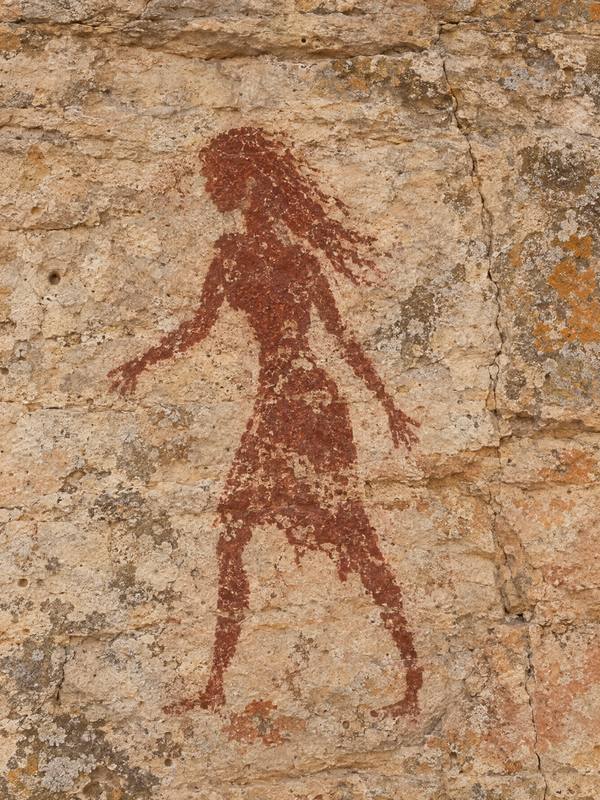 Levantine rock artaround 6000 BC
-
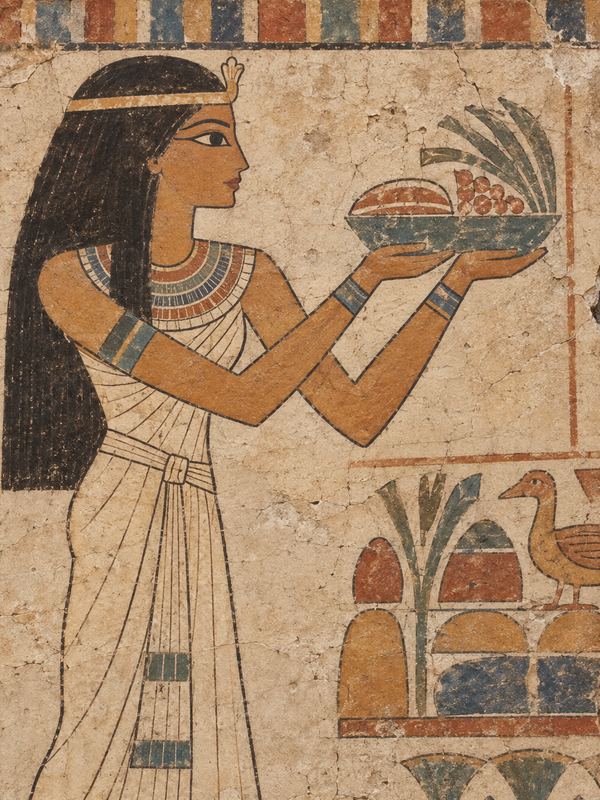 Egyptian tomb paintingaround 2400 BC
-
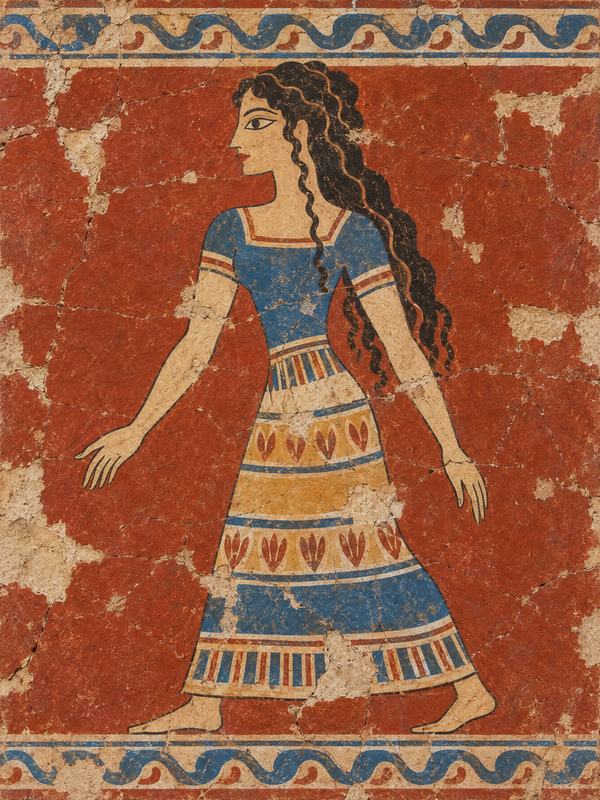 Minoan frescoaround 1600 BC
-
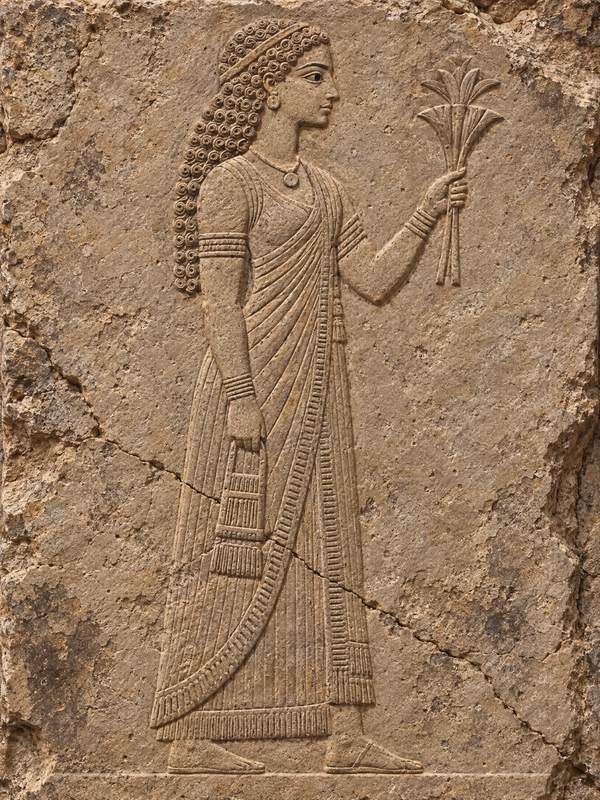 Assyrian palace reliefaround 700 BC
-
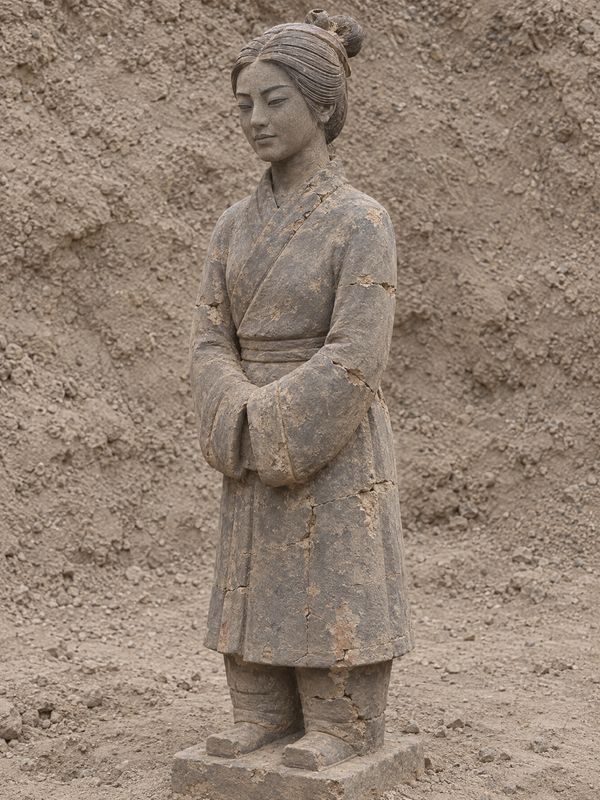 Terracotta armyaround 220 BC


Questions
What is the difference between red-figure and black-figure?
Which part is painted black. Black-figure, developed at Corinth around 700 BC and perfected in Athens in the sixth century, paints the figures in the slip that fires black and scratches the detail through it with a graver, so the orange clay shows as a hairline. Red-figure, invented in Athens around 530 BC, reverses that: the figures stay bare clay, the background is painted black, and the detail is drawn with a brush. Erafy uses red-figure, which lasted until about 320 BC.
Why are Greek vases orange and black?
Because of the clay and the kiln. Attic clay is rich in iron and fires orange; the slip brushed over it fires dense glossy black in a three-stage firing while the bare clay stays orange, and a thinner wash of the same slip fires a translucent golden brown. Three values, and the firing cannot make a fourth, which is why there is no shading on a Greek pot.
What would I look like on a Greek vase?
Erafy makes a new picture from your photo in the style of the year you pick, so how much it resembles you varies from one go to the next. It varies most in the black-and-white years and in the crafts before 1900, where faces are drawn in the craft's style. We make no promise about how any result will look.
