
Your photo as a chromolithograph poster
In 1868 a Paris printer could draw you in greasy crayon on a few slabs of limestone and pull a poster in flat vermilion, blue-black and blue-green. Erafy makes that sheet from your photo, before any lettering was added.

AI photo app · Free to download · iPhone · 18+

Nobody in the examples is a real person — the before photos are invented faces. These are our best results, not average ones. Sometimes AI can't handle it and modifies your face. All we can offer is a try.
What a chromolithograph was
Lithography, invented in 1796, prints from a slab of limestone. The artist draws straight onto the stone with a greasy crayon; grease takes ink, wet bare stone rejects it, and the drawing prints as drawn. Colour came by using one stone per colour, registered and overprinted: three stones for a cheap advertisement, twenty or more for a fine chromo.
Chromolithography is what put coloured pictures on ordinary walls and hoardings. From the late 1860s the large colour poster took shape in Paris: a figure standing large and near, silhouetted against a plain or vignetted ground, three or four flat colours, and hand-drawn lettering. A middle tone is made three ways only: the crayon's grain dragged across the tooth of the stone, ink spattered off a brush, and one flat colour printed over another.
Erafy pulls your photo from a small set of stones: a blue-black key, a vermilion, a flat blue-green for the ground, and the cream paper as the last value, taken before any lettering stone joined the set. What a poster can hold of a person is a drawn version: the shape of the head and jaw, the set of the eyes and the way you stand. With Situation on you might be waltzing under the gas globes of a ball garden.
More pictures
-
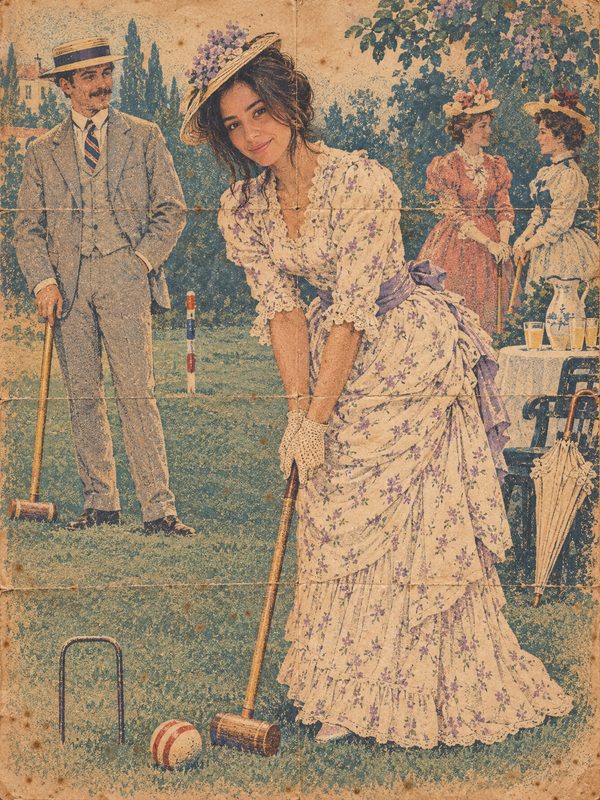 A game of croquet
-
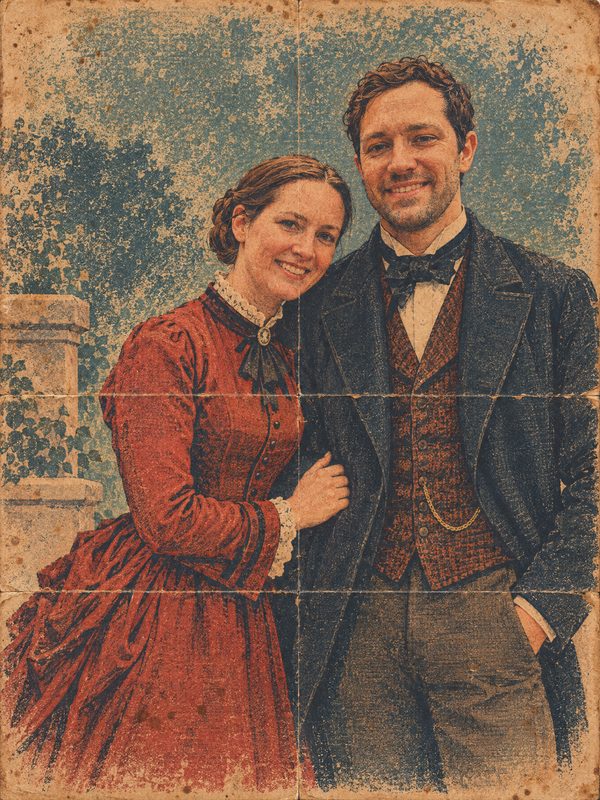 A couple
-
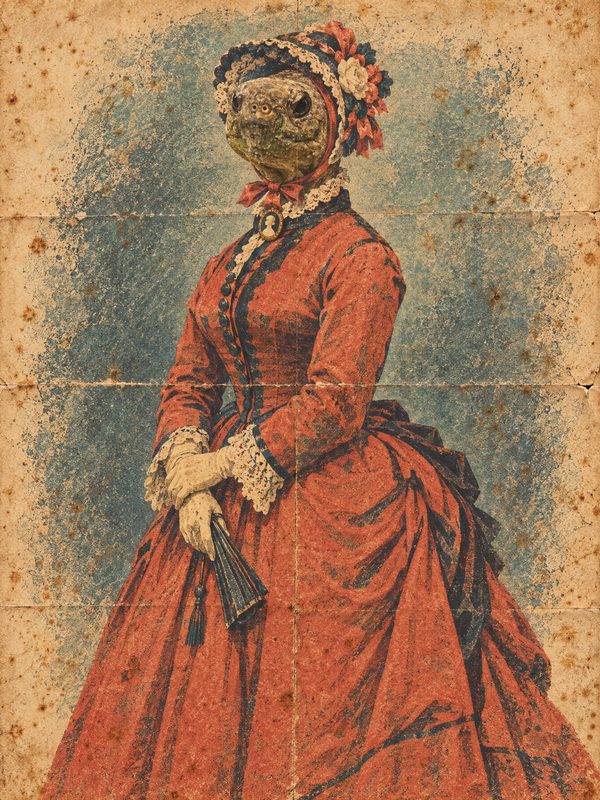 A tortoise as a person


Other crafts: Painted and printed
-
-
-
-
 Rococo1760
-
-
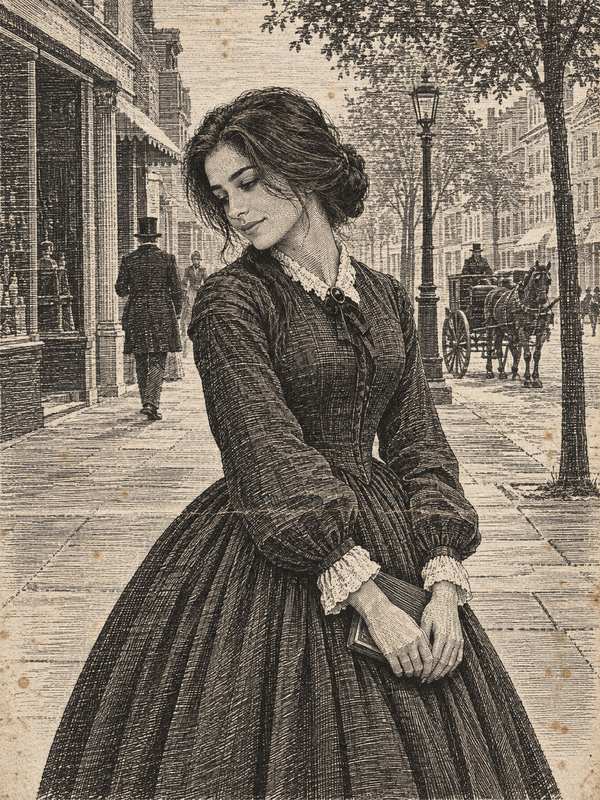 Wood engraving1850
-
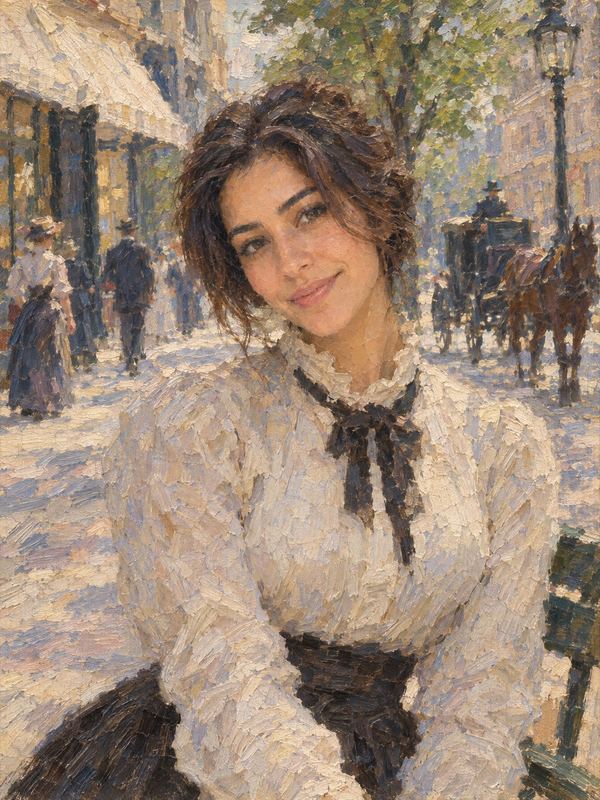


Questions
Why is there no lettering on the poster?
A poster was printed from a set of picture stones, and the lettering stone was added last, so a pull taken before it joined the set carries the picture alone. Erafy prints that state. Nothing is written on the sheet: no title, no date, no signature.
How is a chromolithograph different from a photograph of the same year?
In the 1860s a photograph was monochrome, small, private and literal: an albumen print mounted on card. The chromolithograph was coloured, large, public and stylised, pasted on a hoarding or a wall. If a scene from those years needs colour, print and paint are the honest sources; colour photography was not a practical medium then.
What would I look like on a vintage poster?
Erafy makes a new picture from your photo in the style of the year you pick, so how much it resembles you varies from one go to the next. It varies most in the black-and-white years and in the crafts before 1900, where faces are drawn in the craft's style. We make no promise about how any result will look.
