
Your photo as a Hokusai-style woodblock print
An Edo print shop of 1832 cut a separate cherry block for every colour and pressed each by hand onto mulberry paper. Erafy makes a sheet like that from your photo: you stand whole in a wrapped robe, every colour flat, the sky graded in Prussian blue.

AI photo app · Free to download · iPhone · 18+

Nobody in the examples is a real person — the before photos are invented faces. These are our best results, not average ones. Sometimes AI can't handle it and modifies your face. All we can offer is a try.
How a ukiyo-e print was made
A full-colour woodblock print, nishiki-e, was a team product: a publisher, a designer whose name alone survives, a block cutter and a printer. The designer's brush drawing was pasted face down on a cherry plank and cut through. Then a separate block was cut for every colour, each registered to carved marks and rubbed down by hand with a baren, five to ten impressions lining up on one sheet of cream mulberry paper.
A colour block prints one flat tint and stops dead at the key line. There is no shading, no cast shadow and no half-tone; the only gradation is bokashi, a damp wipe of ink along the edge of a block. Around 1830 imported Prussian blue became cheap, and it is what makes the skies and seas of that decade so saturated.
Erafy cuts your photo as a vertical sheet. You stand whole and small, in a wrapped robe with a sash, its ink matched to what you wore and a ruled pattern printed on it. Faces here were types, not portraits: the same few strokes for everybody, so the print carries your build, hair colour and bearing rather than your features. With Situation on you might be picnicking under cherry blossom or eating noodles at a night stall.
More pictures
-
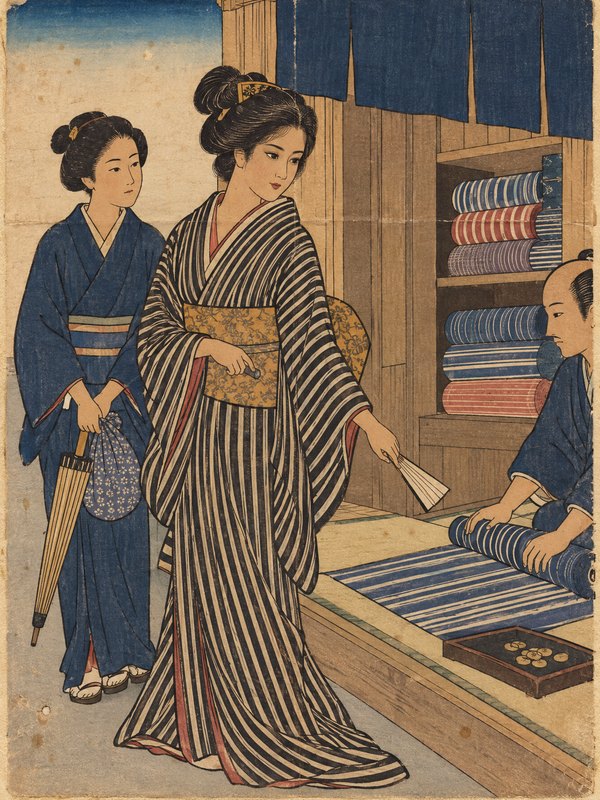 At the cloth shop
-
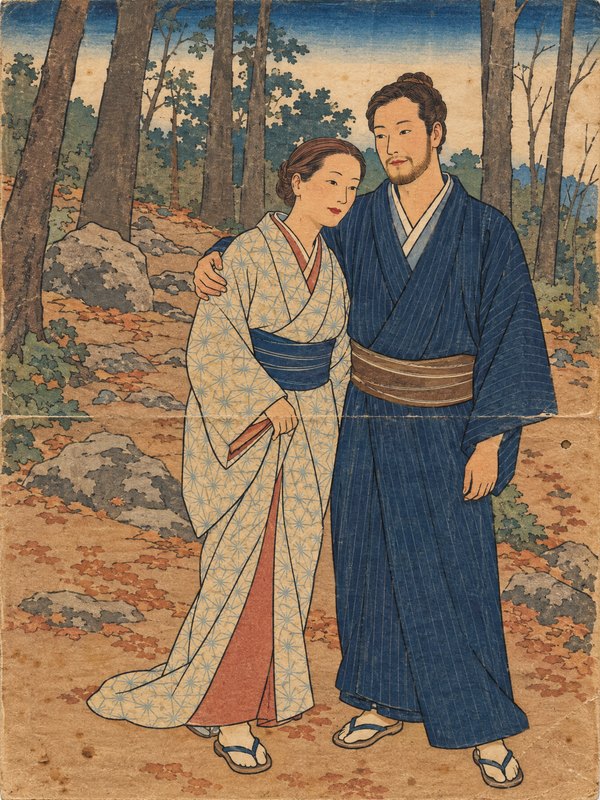 A couple
-
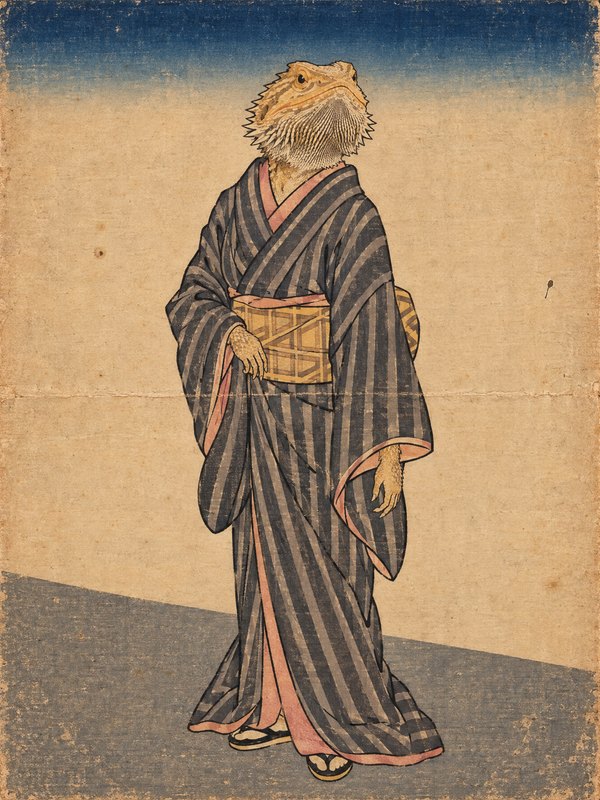 A bearded dragon as a person


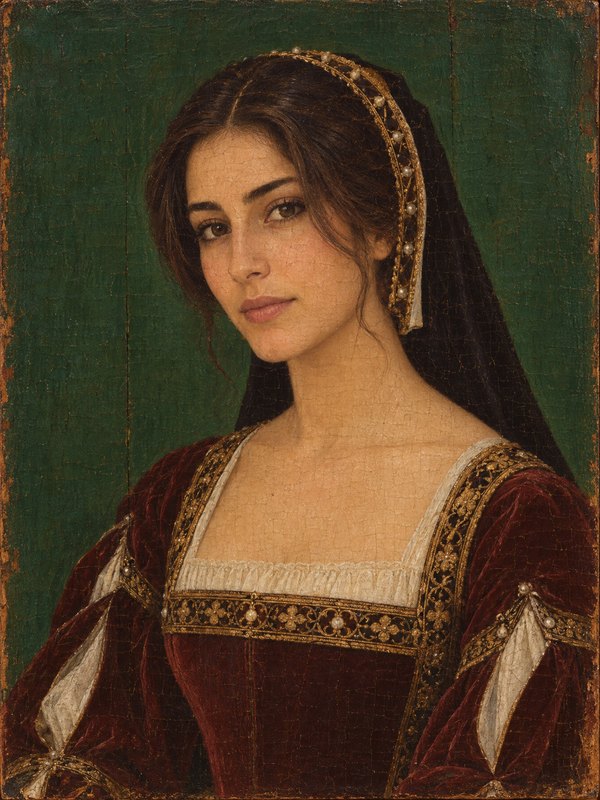
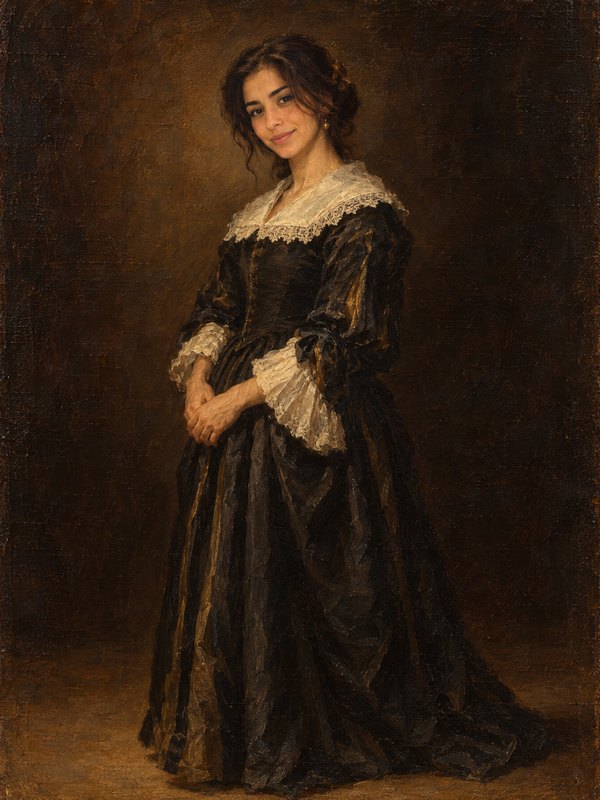
Other crafts: Painted and printed
-
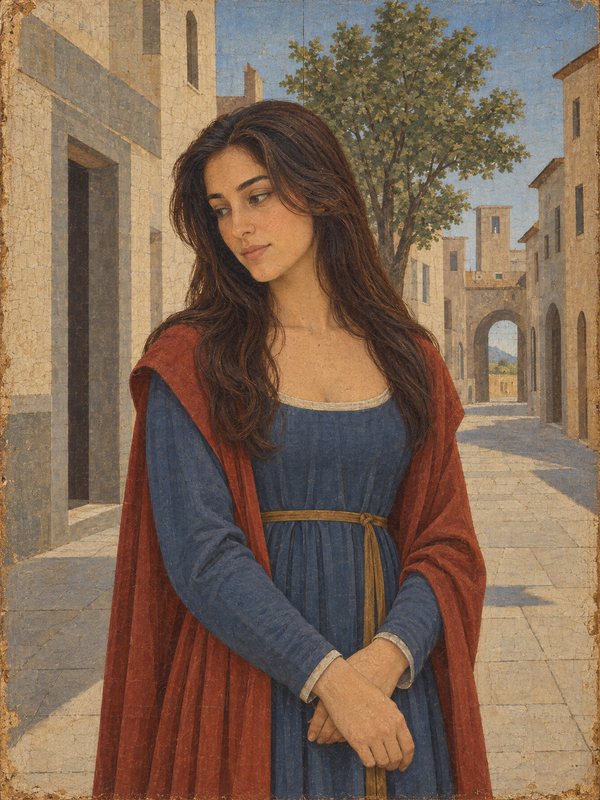
-
-
-
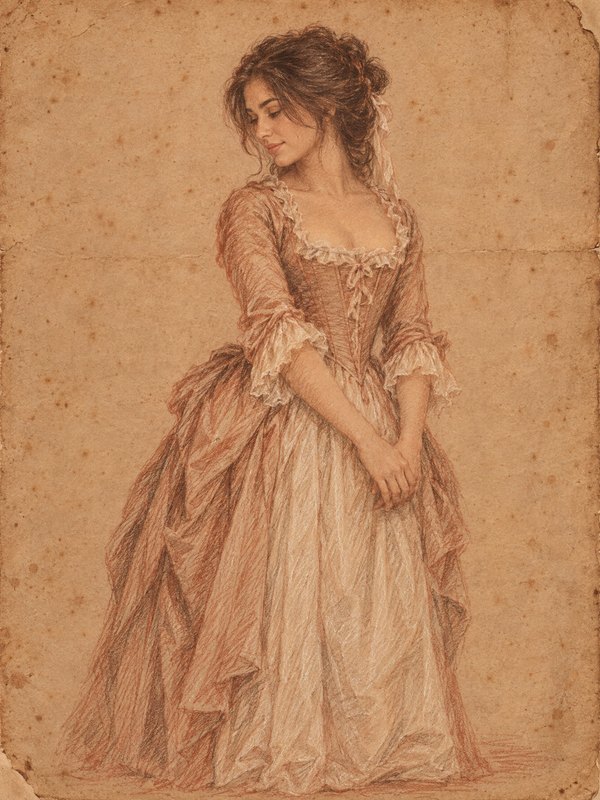 Rococo1760
-
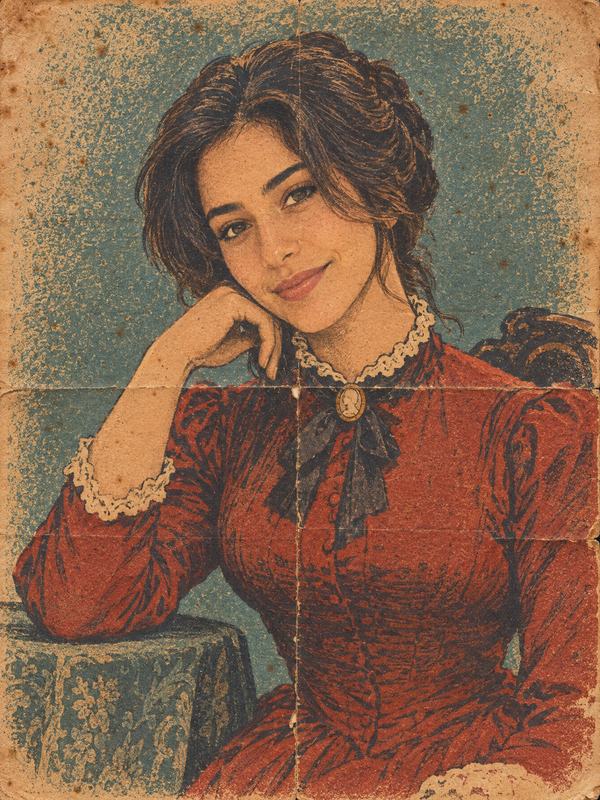
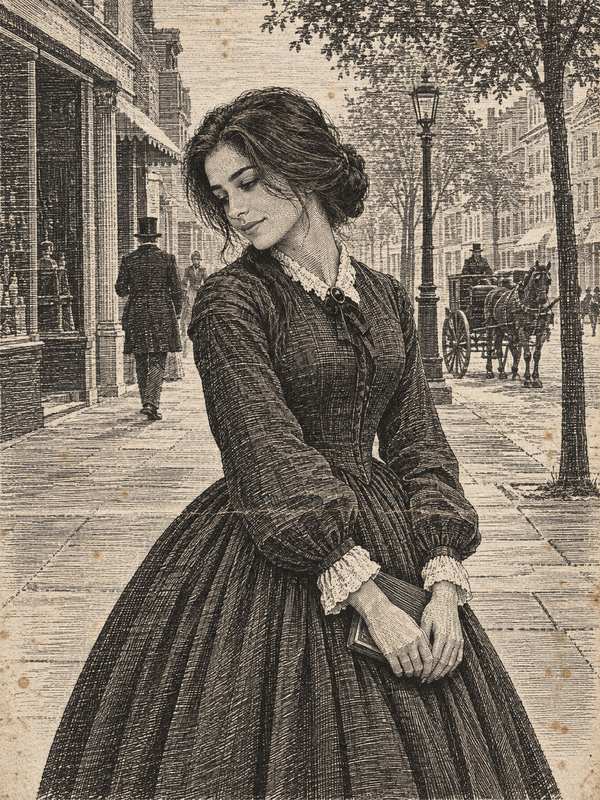 Wood engraving1850
-
-


Questions
Is this a Hokusai print?
No. Hokusai names the look: the full-colour landscape print of the 1830s, when his Thirty-six Views of Mount Fuji sold so well that the set ran to forty-six sheets. Erafy makes a new sheet in that manner from your photo, with the same tools: a key block, a block per colour, Prussian blue and a graded wipe along the top of the sky. No existing print is copied.
Why are the faces all the same?
Because in these prints faces were types. The designer drew one standard face for everybody, a thin line round the jaw, a long stroke and a dot for each eye, a small bud of red for the mouth, and people were told apart by their build, their hair, how they stood and the pattern of their robe. A print flattens a face by its nature, so expect the sheet to keep your outline and colouring more than your features.
What would I look like in a ukiyo-e print?
Erafy makes a new picture from your photo in the style of the year you pick, so how much it resembles you varies from one go to the next. It varies most in the black-and-white years and in the crafts before 1900, where faces are drawn in the craft's style. We make no promise about how any result will look.
