
Your photo as an early Renaissance panel painting
Erafy paints your photo as an Italian tempera panel of 1480, the Renaissance portrait as the workshops made it: a measured space, pale clear colour, the whole figure head to feet.

AI photo app · Free to download · iPhone · 18+

Nobody in the examples is a real person — the before photos are invented faces. These are our best results, not average ones. Sometimes AI can't handle it and modifies your face. All we can offer is a try.
What a Quattrocento painting was
In fifteenth-century Florence a painter worked on a poplar board laid with white gesso. The design went on in dark line, then egg tempera with a little oil: opaque, light and matte, with no thick paint anywhere. The palette was pale: lead white, yellow ochre, vermilion, azurite, malachite and green earth, with flesh laid over a cool green-grey underpaint.
The new thing was a measured room: one viewpoint, a horizon at a standing person's eye level, and every line running back into the picture meeting at one point, so a tiled floor says how far off each figure stands. Figures were simple solids lit from one side. Guilds, confraternities and families commissioned these panels and expected to appear in them.
Erafy makes a tempera panel from your photo. You stand whole, head to feet, inside that measured space. Faces are drawn in a few lines and turned toward the scene, so the panel can keep the shape of a head and jaw, a hair colour and a build, and not much more. With Situation on, the scene may be a grape harvest in the Chianti hills or a round dance at a wedding in the square.
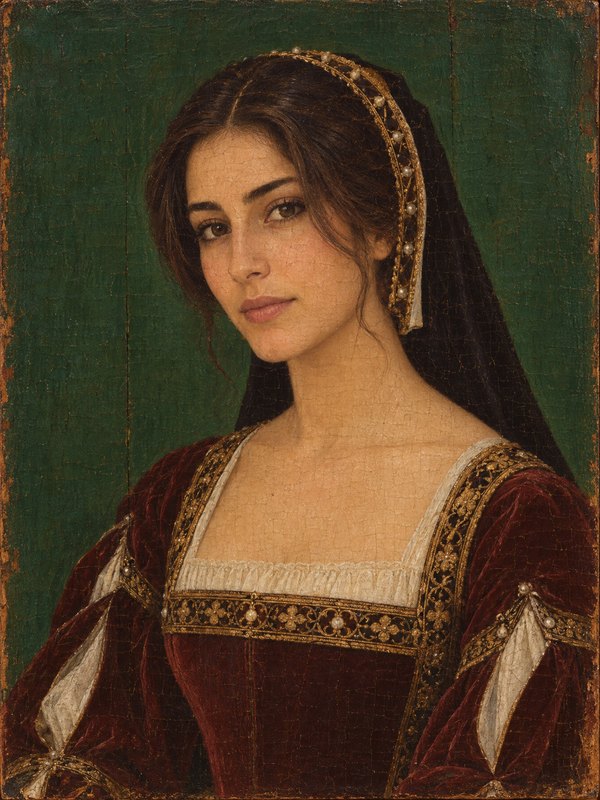
Oil had taken the panel by about 1500; the Holbein Tudor portrait is that next step.
More pictures
-
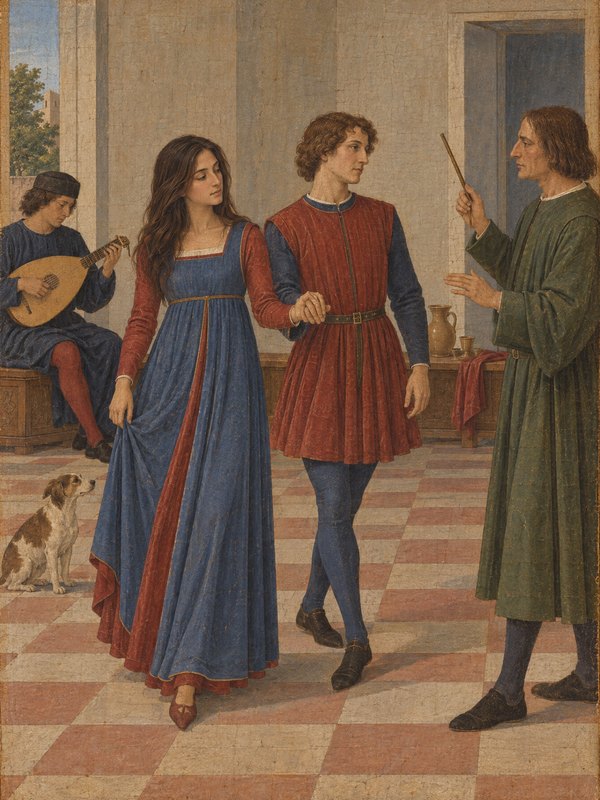 A dance lesson
-
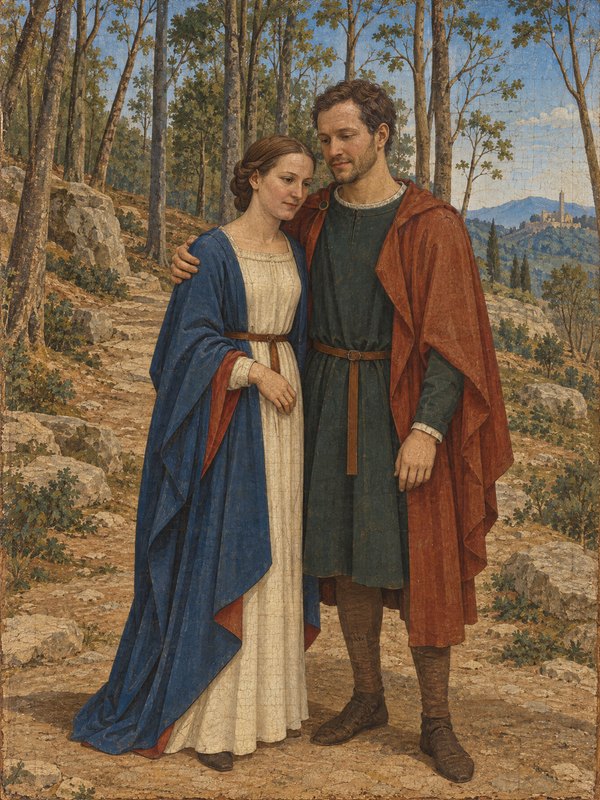 A couple
-
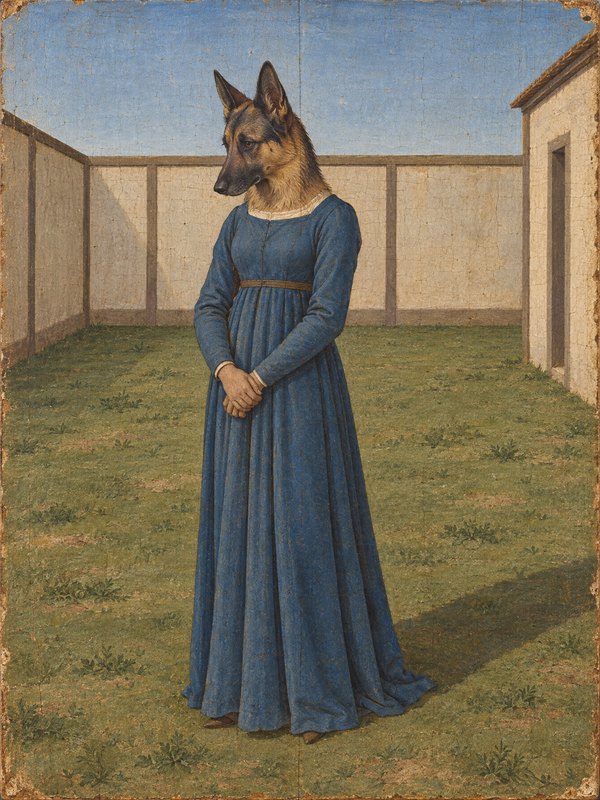 A German shepherd as a person


Other crafts: Painted and printed
-
-
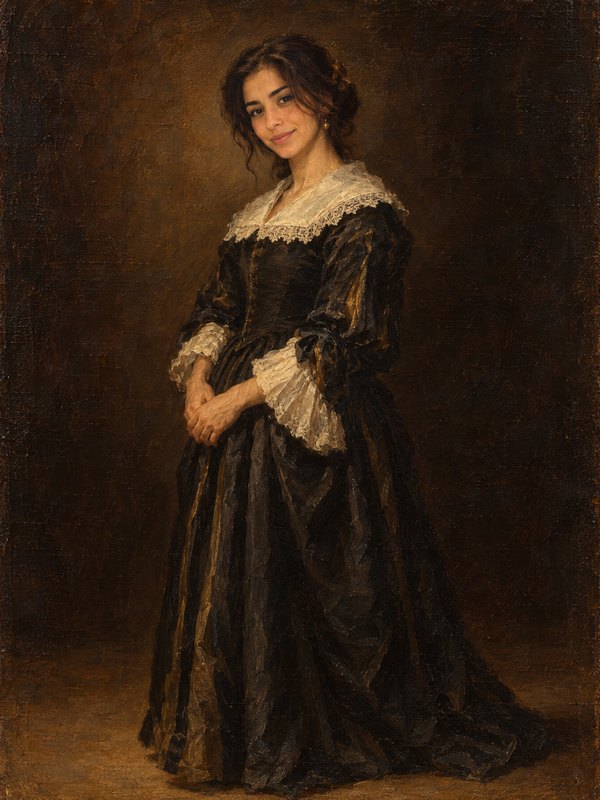
-
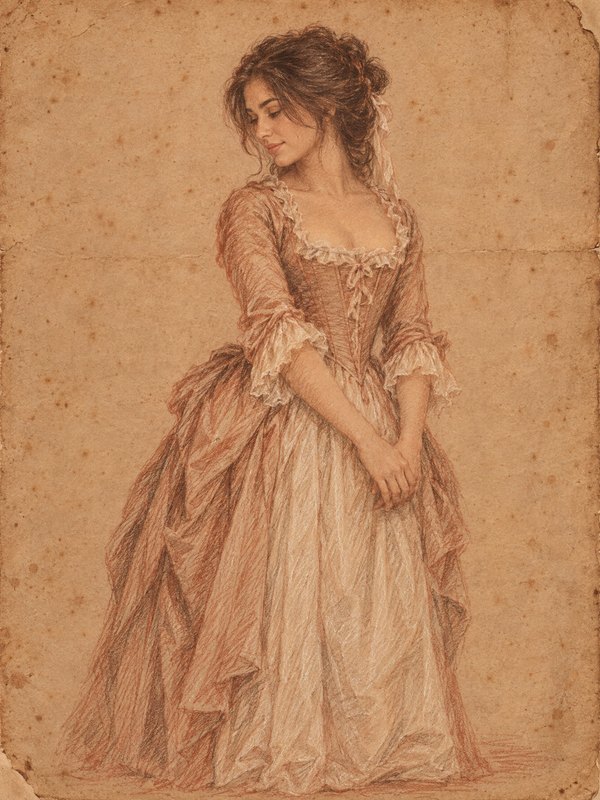 Rococo1760
-

-
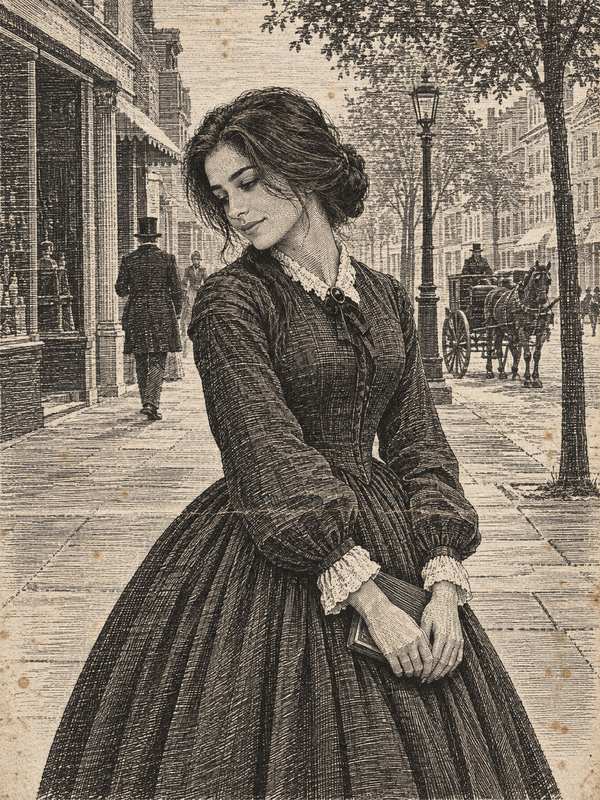 Wood engraving1850
-
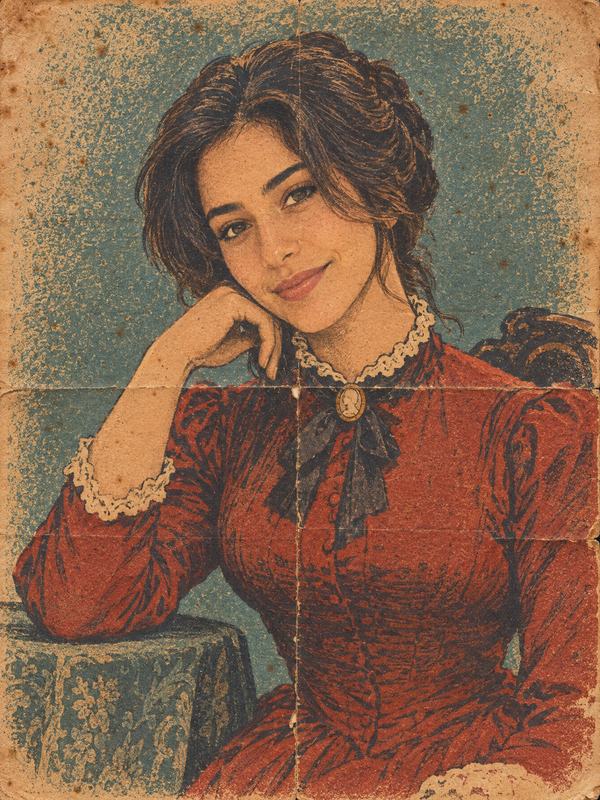
-


Questions
What does Quattrocento mean?
The 1400s, in Italian. In painting it names the century when Florentine painters turned one-point perspective into a working method, and then into arithmetic. Panels were egg tempera on poplar, walls were fresco on wet plaster, and by about 1500 oil had taken over the panel.
Why does nobody in the panel look at the viewer?
In these panels the people are busy with one another inside the picture. Each head was drawn on a sheet beforehand and the panel was worked up afterwards with nobody in front of it, so a face is a few decided steps, turned into profile or near profile with the eyes lowered to the person or the ground beside them. Erafy keeps that habit, so the result looks into its scene rather than out of it.
What would I look like in a Renaissance painting?
Erafy makes a new picture from your photo in the style of the year you pick, so how much it resembles you varies from one go to the next. It varies most in the black-and-white years and in the crafts before 1900, where faces are drawn in the craft's style. We make no promise about how any result will look.
