
Your photo as an 1850 wood engraving
Before the halftone screen, every picture in a weekly paper was cut by hand into boxwood. Erafy makes your photo into such a block: a news picture in black ink, you whole and small inside a wide view of your own place.

AI photo app · Free to download · iPhone · 18+

Nobody in the examples is a real person — the before photos are invented faces. These are our best results, not average ones. Sometimes AI can't handle it and modifies your face. All we can offer is a try.
How a wood engraving was made
A wood engraving is cut into the end grain of a boxwood block with a graver. The tool removes what will not print, so the picture is made of white lines cut out of black. Every tone is a texture of parallel cuts, cross-cut where it must go darker and opened wider where it must go paler, with bare paper for the brightest lights. Black ink on off-white rag paper, nothing else.
The block is type-high and prints under low pressure, so it was locked into the forme beside the type. The illustrated weeklies began in London in 1842. A large subject was cut on several blocks bolted together and shared among a team overnight. Until the end of the century no photograph reached a mass audience as a photograph, only as a hand-cut engraving copied from it.
Erafy cuts your photo as a news block, not a sitting: you are whole, head to feet, small inside a wide view of your own place. A face is three flat tints and a handful of dark cuts, no finer than the ruled ground beside it, so what survives of a person is an outline and a bearing. With Situation on you might be skating on a frozen park lake or at a harvest supper in a barn.
More pictures
-
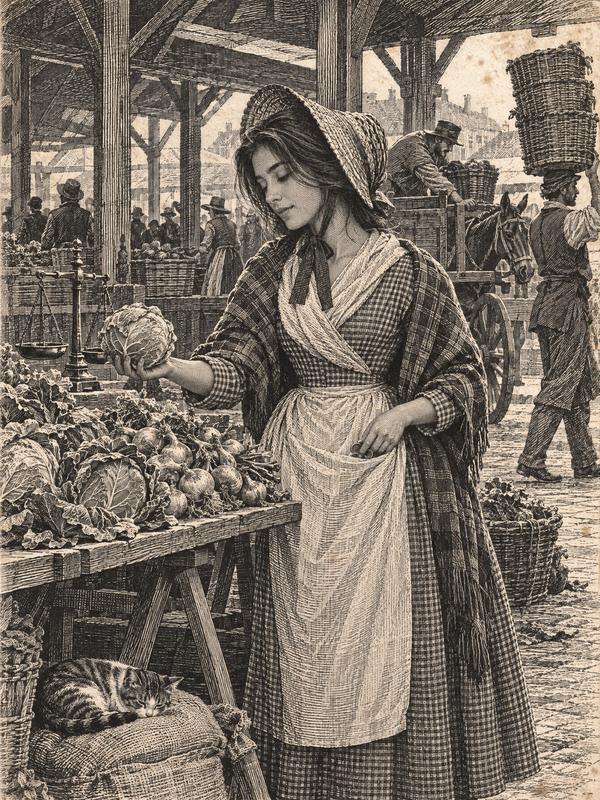 At the market
-
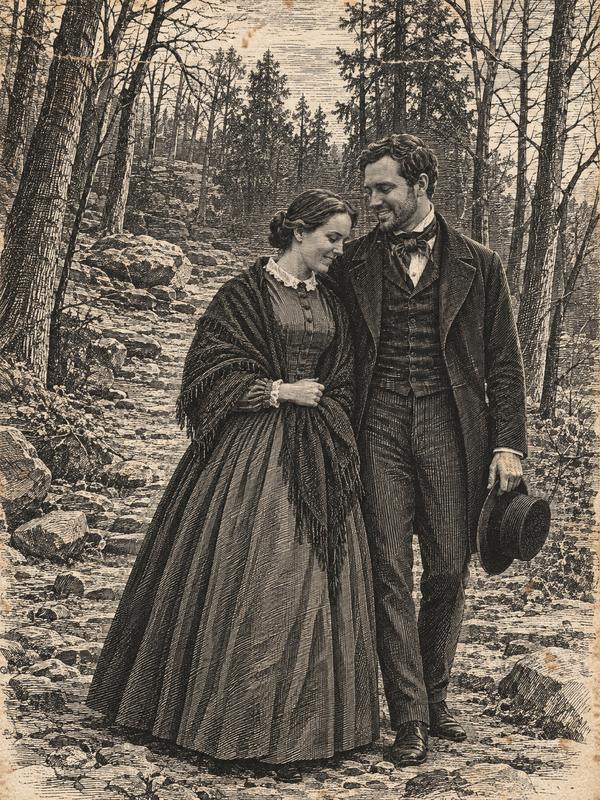 A couple
-
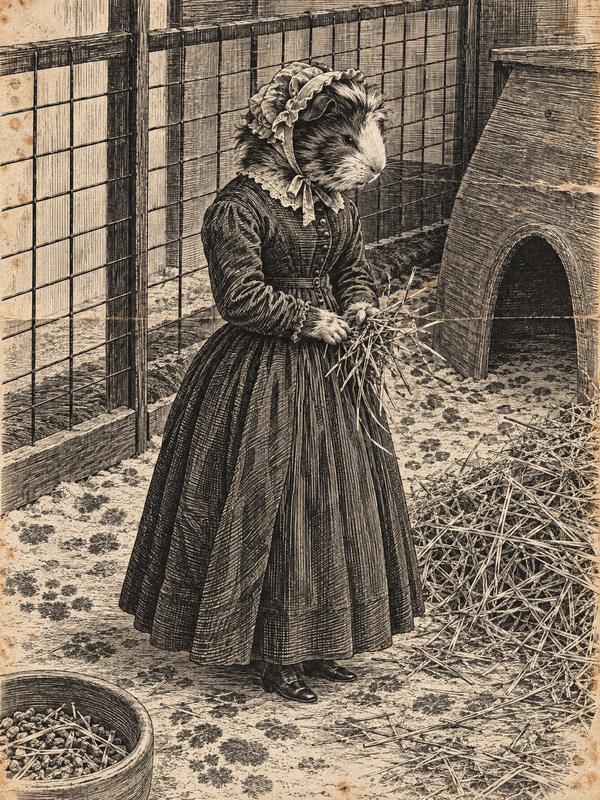 A guinea pig as a person


Other crafts: Painted and printed


Questions
Why is the picture black and white?
Because the press printed black ink and nothing else. A paper could not carry a photograph until the halftone screen arrived at the end of the century, so a reader's picture of a wedding, a harvest or a frozen lake was a hand-cut engraving, often copied from a photograph and signed by the engraver. Colour on a page in 1850 meant a chromolithograph or a hand-coloured print, not a newspaper.
What is the difference between a woodcut and a wood engraving?
A woodcut is cut along the side grain of a plank and prints bold black lines on white. A wood engraving is cut into the hard end grain of boxwood with a graver, so the cuts are fine and close and the picture is built from white lines out of black. The end-grain block also stands up to a long run on a steam press, which is why the weeklies used it.
What would I look like in a wood engraving?
Erafy makes a new picture from your photo in the style of the year you pick, so how much it resembles you varies from one go to the next. It varies most in the black-and-white years and in the crafts before 1900, where faces are drawn in the craft's style. We make no promise about how any result will look.
