
A 1930s black-and-white snapshot of you
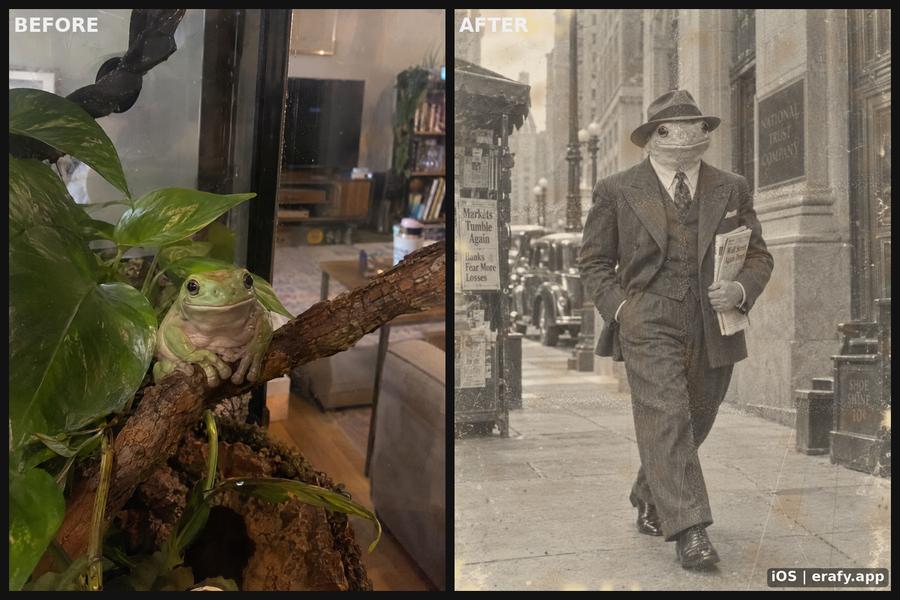
A new picture from your photo, the way a 1930s box camera would have made it: a fixed exposure that could not be changed, new film forgiving enough to cover for that, and a small drugstore print, creamy and soft.

AI photo app · Free to download · iPhone · 18+

Nobody in the examples is a real person — the before photos are invented faces. These are our best results, not average ones. Sometimes AI can't handle it and modifies your face. All we can offer is a try.
How photos looked in the 1930s
The 1930s box camera had one exposure built in, a sliding plate with three holes and nothing else to set. No meter: you read the film carton, stood eight feet back and hoped for sun. What changed was the film: from 1931 a double-coated emulsion, a fast layer over a slow layer, forgave a wrong guess and rescued hazy days.
The look is gentle: soft gradation, creamy mid-tones, highlights that hold. The film still could not see red, so skies went pale, lips and sunburn went dark, freckles showed and light blue eyes came out luminous. Low evening sun came out dark, since the film barely saw warm light. The frame was rectangular, never square; the people posed at mid-distance in open sun.
Money was short. Many loaded the cheaper blue-sensitive film, grainier and more red-blind, and had the roll contact-printed at the drugstore: a small white-bordered print, often deckle-edged, for a black-paper album. A box with an enamelled faceplate in rose, green or blue was bought for its looks and took the same picture. Erafy draws camera and film at random, then adds ninety-odd years of fading, dust and rust spots.
With Situation on: the family around the radio, a day at the seaside, feeding the chickens. The 1920s came before; the 1940s brought flash and 35mm.
More from the 1930s
-
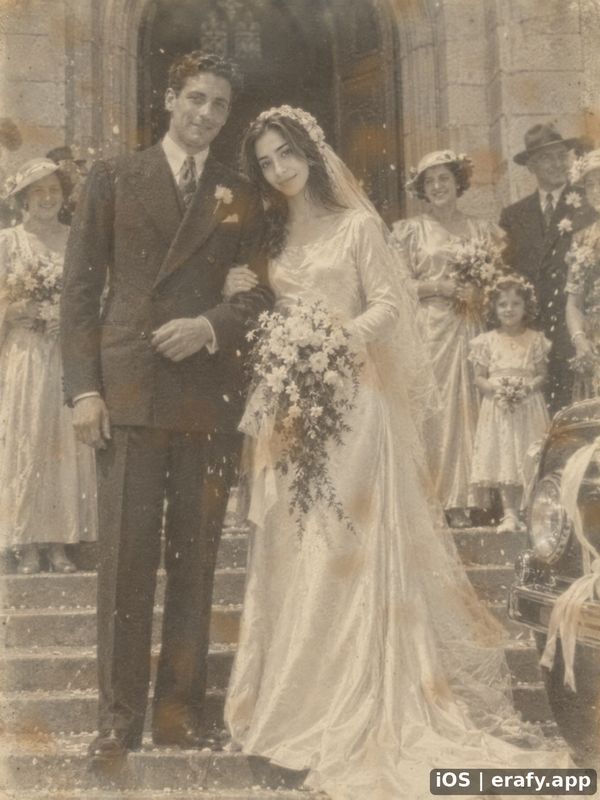 Wedding
-
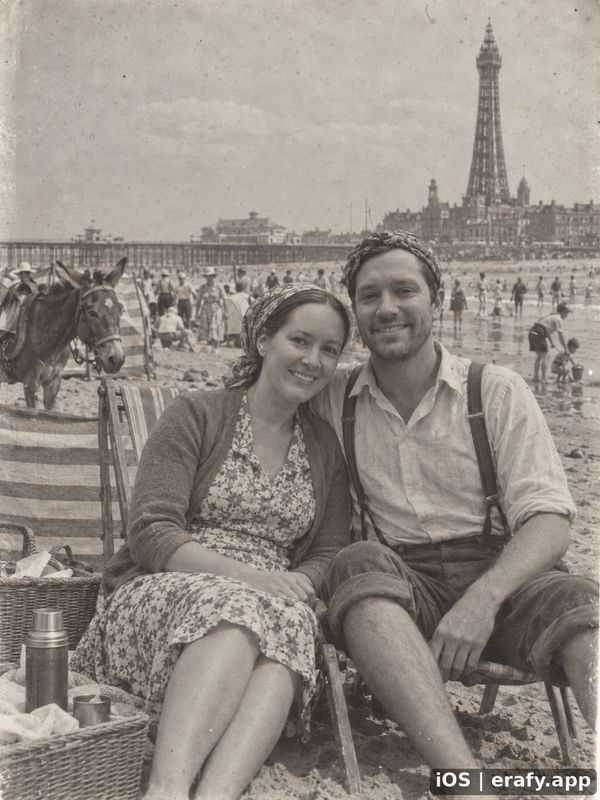 Couple · Beach
-
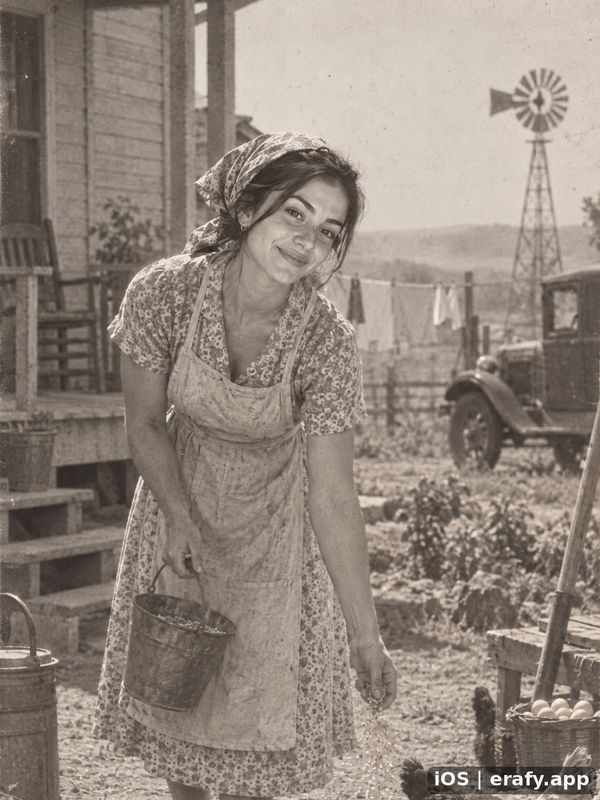 Farmyard
-
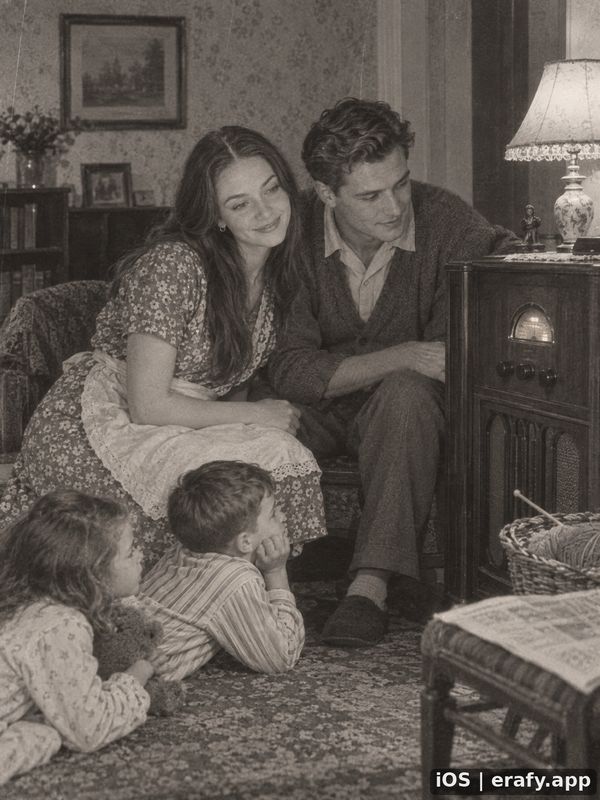 Around the radio
-


Other years
-
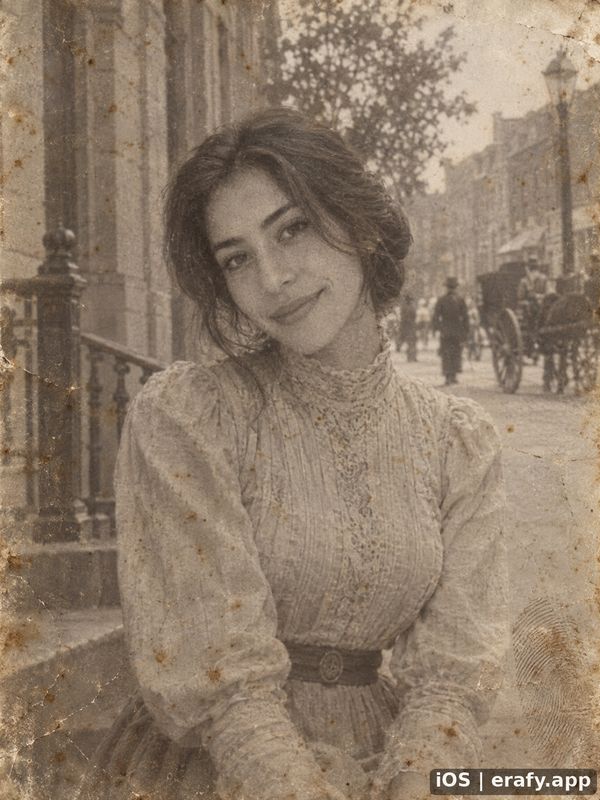 1900Early roll film, black and white
-
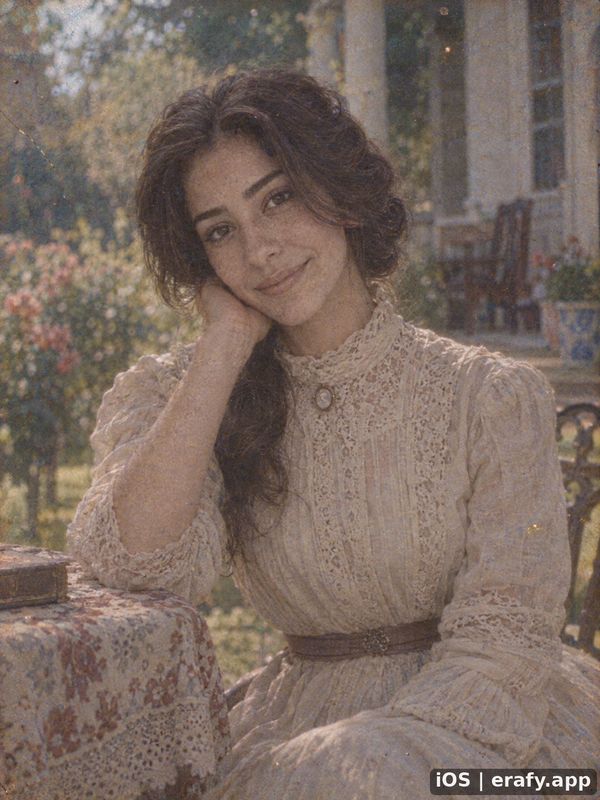 1910Glass plates, film packs and early colour plates
-
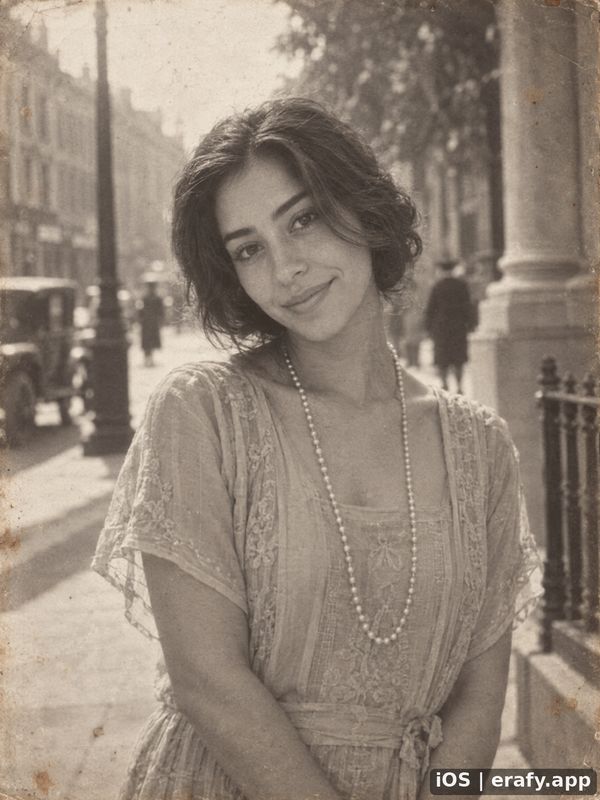 1920Orthochromatic black and white
-
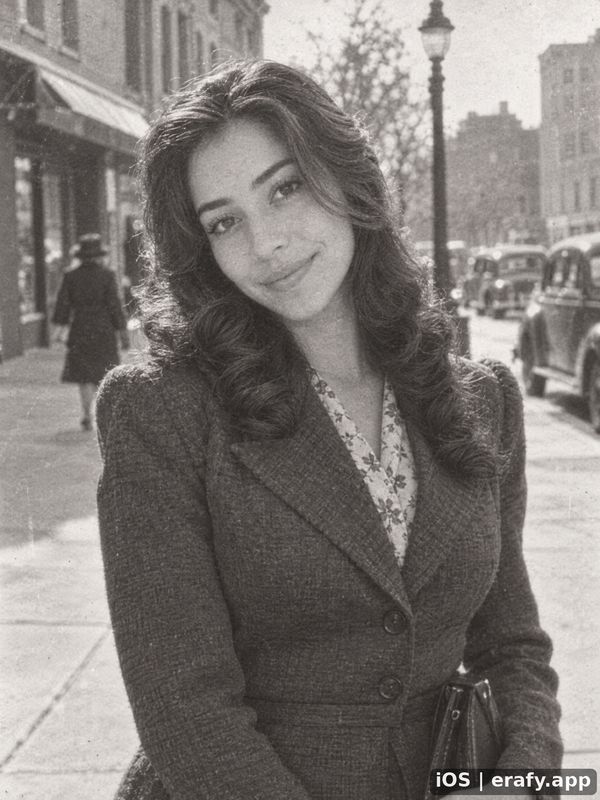 1940Wartime black and white
-
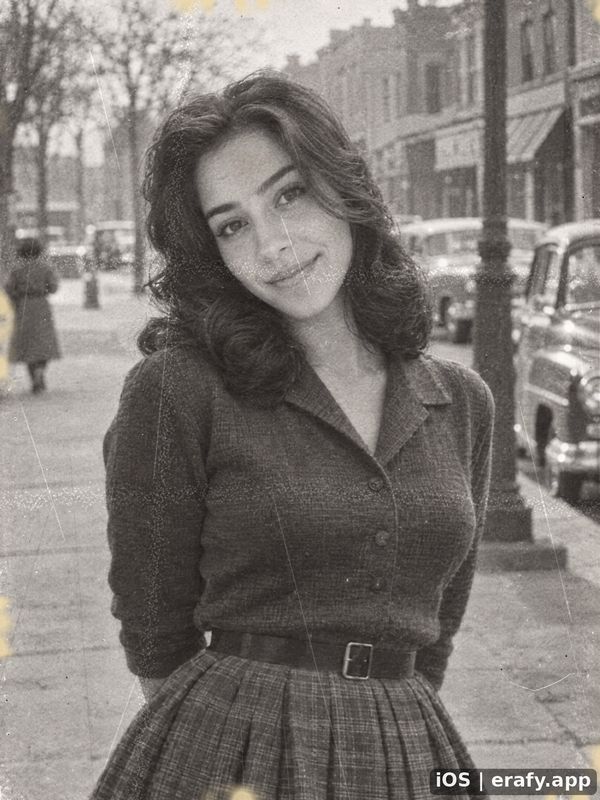 1950Black and white, and the first colour
-
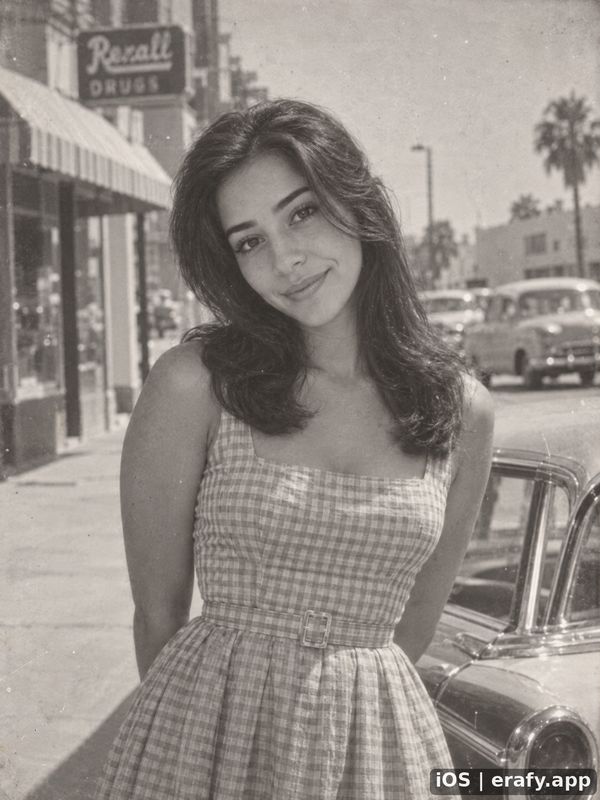 1960Colour slides and black and white
-
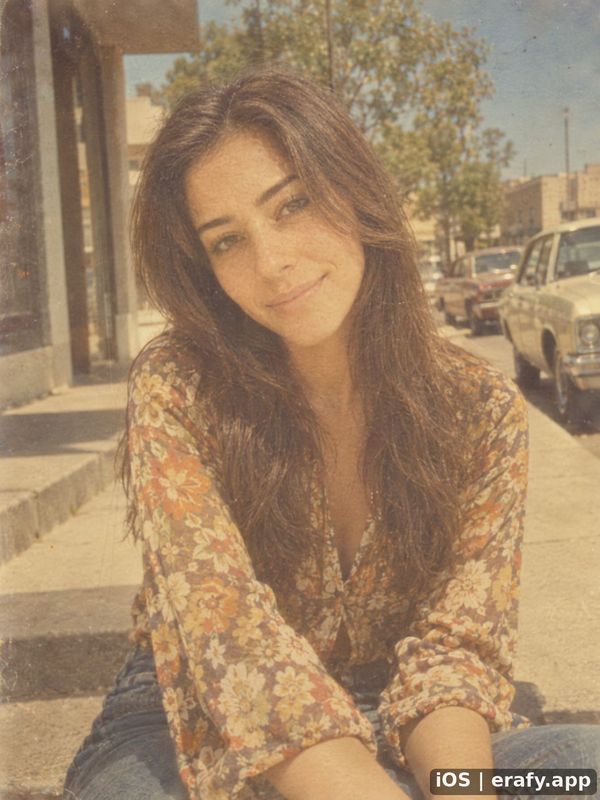 1970Warm, faded colour film
-
 198035 mm colour, pocket cameras, flash
-
 1990Drugstore colour film and disposables
-
 2000Date stamps and the first digital cameras
-
 2010Early phone cameras
-
 2013Retro filter apps
-
 2016Phone portrait mode
-
 2019Night mode and ultrawide
-
 2022The modern phone camera
-
 2025Today's phones


Questions
Why do 1930s photos have wavy edges?
Most were contact prints the size of the negative, made where the film was handed in, with a white border that was often trimmed with a deckled or scalloped edge or rounded corners. The border also took a caption in white ink or pencil.
Could you take colour photos in the 1930s?
Not as snapshots. The colour film of 1928 was for home movies, and the colour plates that existed were slow, costly and for hobbyists. By the end of the decade a colour slide film existed for keen amateurs, but the family album stayed black and white.
What would I look like in the 1930s?
Erafy makes a new picture from your photo in the style of the year you pick, so how much it resembles you varies from one go to the next. It varies most in the black-and-white years and in the crafts before 1900, where faces are drawn in the craft's style. We make no promise about how any result will look.
