
An 80s flash snapshot of you
Hand Erafy a photo and the year 1980, and it makes a new 80s print from it with AI: 35 mm, autofocus, a built-in flash, glossy paper from a drugstore minilab.

AI photo app · Free to download · iPhone · 18+

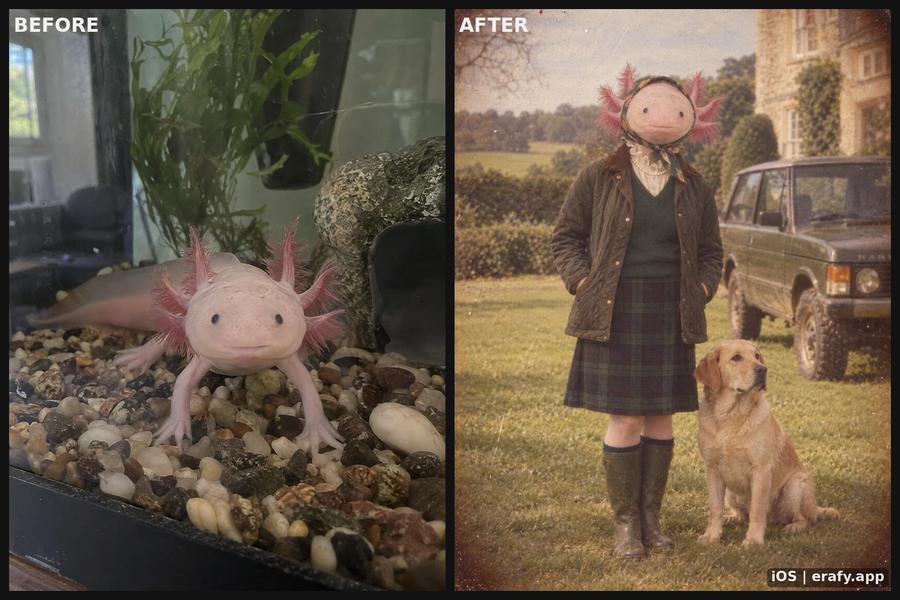
Nobody in the examples is a real person — the before photos are invented faces. These are our best results, not average ones. Sometimes AI can't handle it and modifies your face. All we can offer is a try.
How 1980s photos looked
By 1980 the good snapshot was a 35 mm colour print. The new compact cameras focused themselves with an infrared beam, set the exposure, wound on by motor, and had an electronic flash you popped up by hand. A drugstore minilab turned the roll into glossy 4 by 6 inch prints with thin white borders, often with a faint orange cast from the machine.
Indoors that flash made the look the decade is known for: a flat bright face, a hard-edged shadow on the wall just behind, strong red-eye, and a room gone near black a few feet back. The cheap end still shot tiny pocket cartridges, grainier and softer, and instant cameras spat out a square print, soft and pastel, that developed in the hand.
Erafy's 1980 draws a camera at random for each picture: the compact in hard midday sun, its flash at night, a pocket cartridge, a slide, a reflex camera in warm lamplight, or an instant lit by its flashbar. The prints have faded somewhat, warmer, blues muted, but less than their 1970s parents. Situation, on by default, picks the setting: an aerobics class in leg warmers, a roller rink, or a den with a video game on the television.
The orange date in the corner came later, with the 1990s.
More from the 80s
-
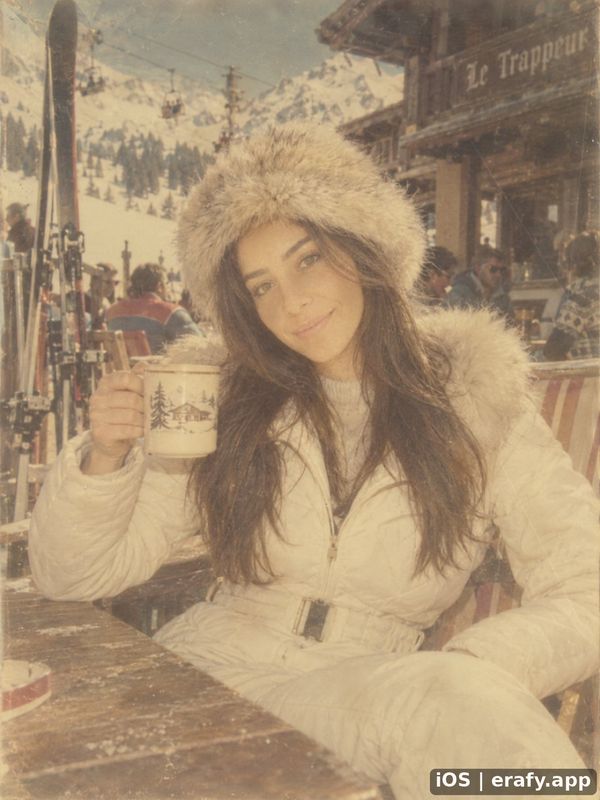 Ski lodge
-
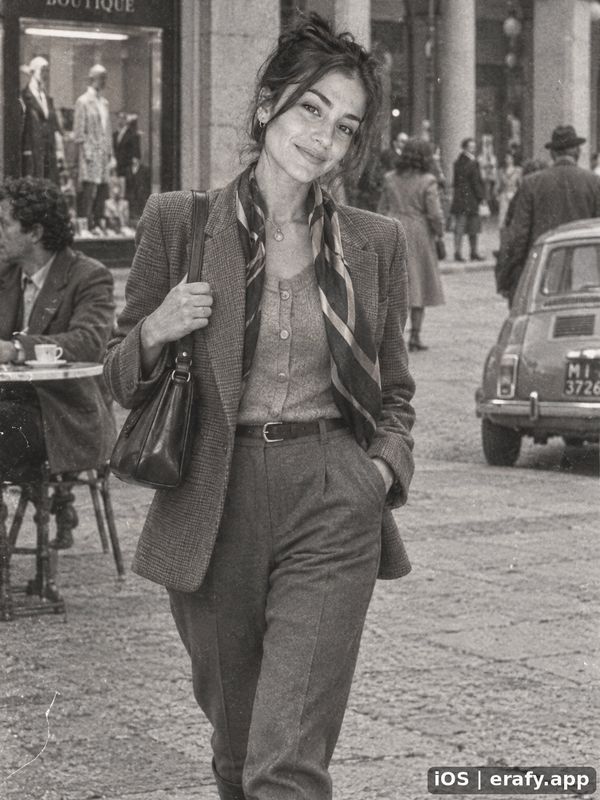 Piazza
-


Other years
-
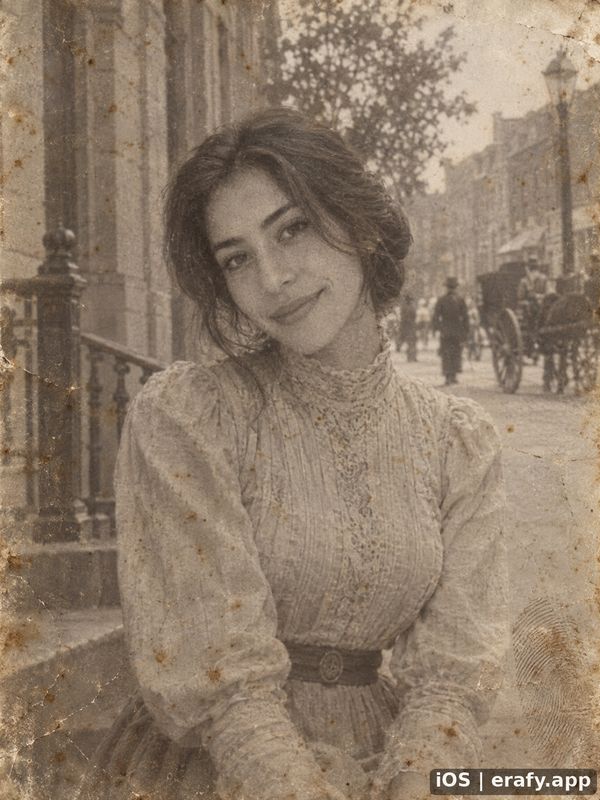 1900Early roll film, black and white
-
 1910Glass plates, film packs and early colour plates
-
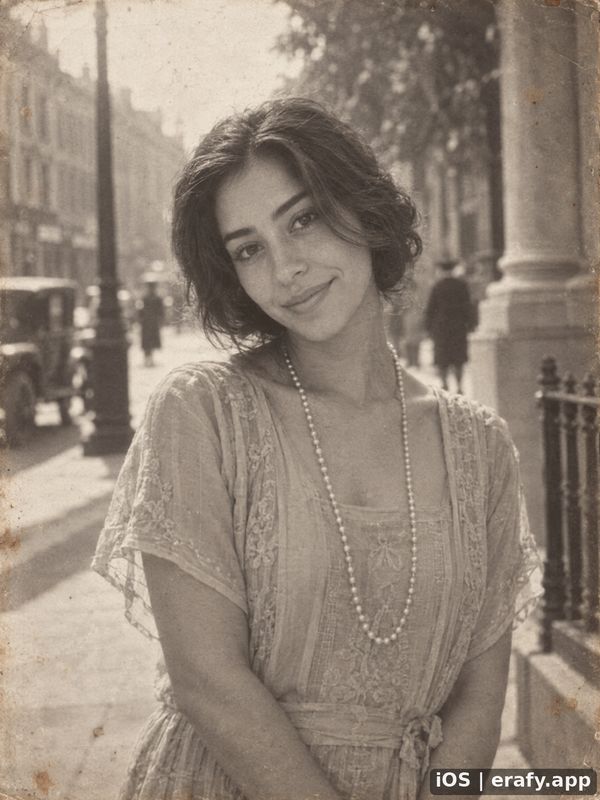 1920Orthochromatic black and white
-
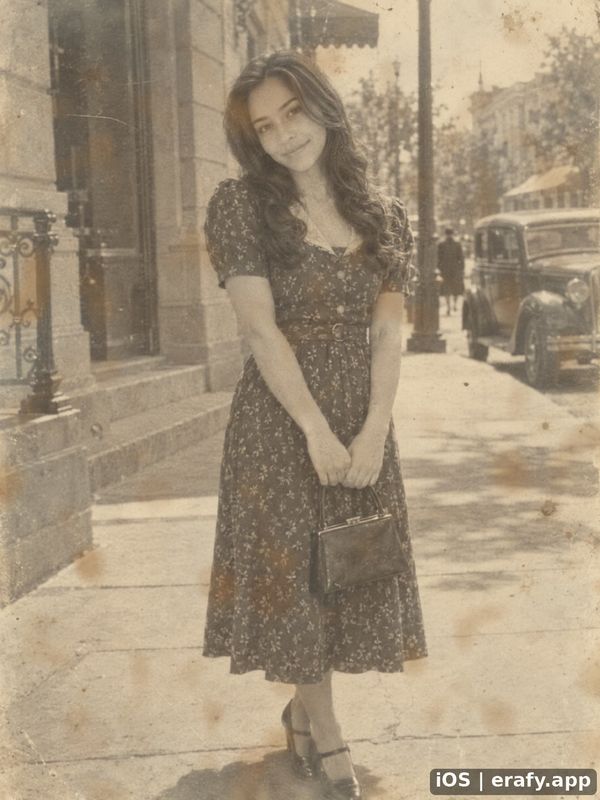 1930Roll-film snapshots
-
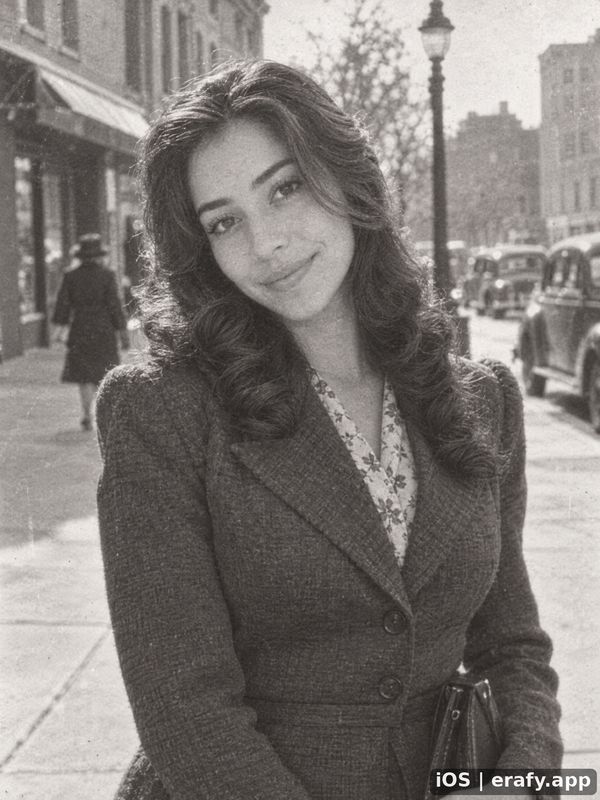 1940Wartime black and white
-
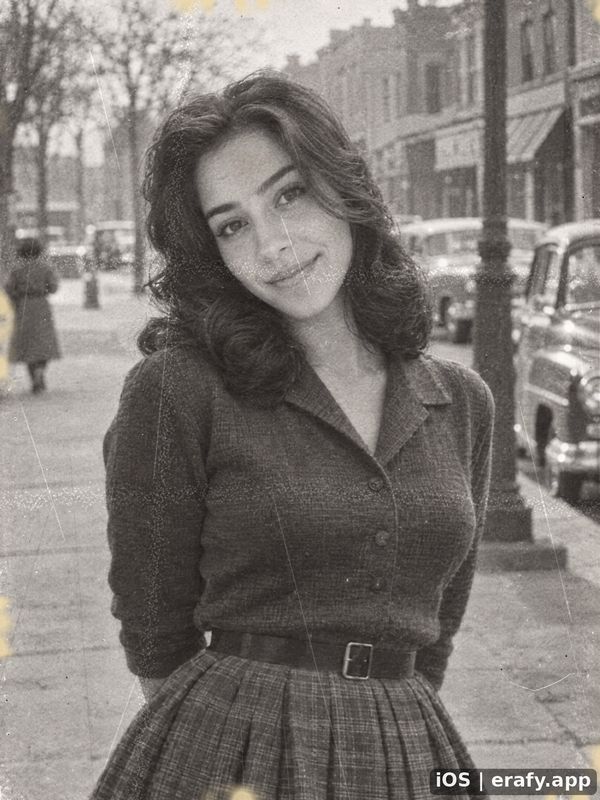 1950Black and white, and the first colour
-
 1960Colour slides and black and white
-
 1970Warm, faded colour film
-
 1990Drugstore colour film and disposables
-
 2000Date stamps and the first digital cameras
-
 2010Early phone cameras
-
 2013Retro filter apps
-
 2016Phone portrait mode
-
 2019Night mode and ultrawide
-
 2022The modern phone camera
-
 2025Today's phones


Questions
Why do 1980s photos have red eyes and a black background?
Because of the built-in flash. On the compact cameras of 1980 the flash sat right beside the lens and fired straight at the subject, so eyes came back red, the face flat and bright, and a hard shadow landed on the wall just behind. The flash reached only two to four metres, and everything beyond that fell to black. The red-eye-reduction pre-flash came with the next generation of compacts.
What film did people use in the 1980s?
Mostly 35 mm colour negative film, ISO 100 for daylight and the faster ISO 400, introduced in 1977, for indoors and flash, printed by a drugstore minilab. The cheap tier still shot pocket cartridges with a tiny negative, grainier and softer, and a disc-film camera with an even smaller negative arrived in mid-1982. Slides and black and white had become the hobbyist's choice.
What would I look like in the 80s?
Erafy makes a new picture from your photo in the style of the year you pick, so how much it resembles you varies from one go to the next. It varies most in the black-and-white years and in the crafts before 1900, where faces are drawn in the craft's style. We make no promise about how any result will look.
