
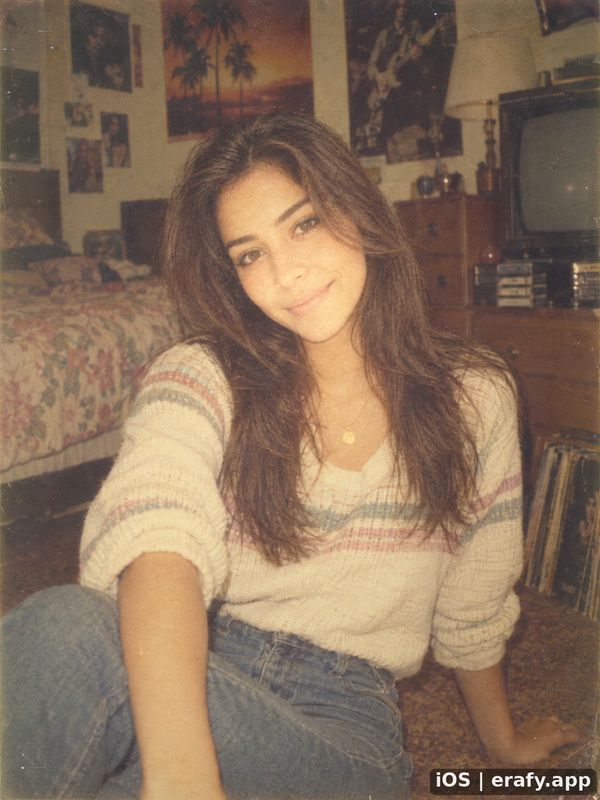
Your photo as a 90s print, date in the corner
Erafy makes a new 90s snapshot from a photo of you with AI: a zoom compact's glossy print with the date burnt in orange, a disposable camera's soft frame, or an instant print.

AI photo app · Free to download · iPhone · 18+

Nobody in the examples is a real person — the before photos are invented faces. These are our best results, not average ones. Sometimes AI can't handle it and modifies your face. All we can offer is a try.
The 1990s snapshot and its cameras
The household camera of 1990 was a 35 mm autofocus compact, increasingly with a slow zoom lens, a motor, and a flash that popped up by itself in anything dim. Many had a quartz date back that burnt an orange seven-segment date into the lower right corner. The one-hour lab returned glossy 4 by 6 inch prints, warm and punchy on the usual film.
The disposable camera was the boom of the moment: film already inside a plastic box, a fixed-focus lens, one aperture, one shutter speed, and on some a flash you charged with a button. American sales went from about three million in 1988 to past twenty million by the early 1990s. Its pictures were soft, a touch plasticky, dark at the corners, at home in bright sun, and carried no date stamp.
Erafy picks a 1990s camera at random: the zoom compact in sun or by flash, date in the corner; the disposable at a party or the beach; a prime-lens compact in lamplight; an autofocus reflex at golden hour; or an instant. Leave Situation on and you might land at a mall food court, a backyard cookout with a minivan, or in a den with a rented videotape on the recorder.
The prints have aged lightly, less than those of the 1980s.
More from the 90s
-
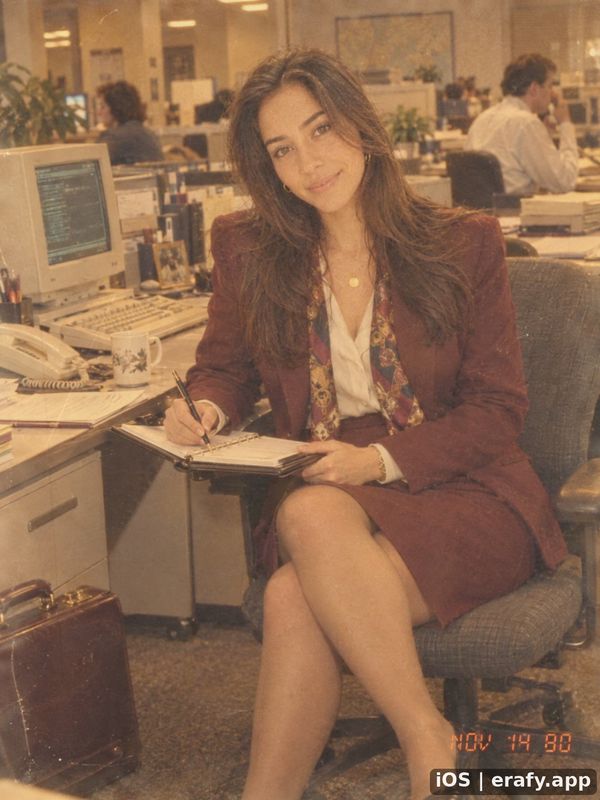 Office
-
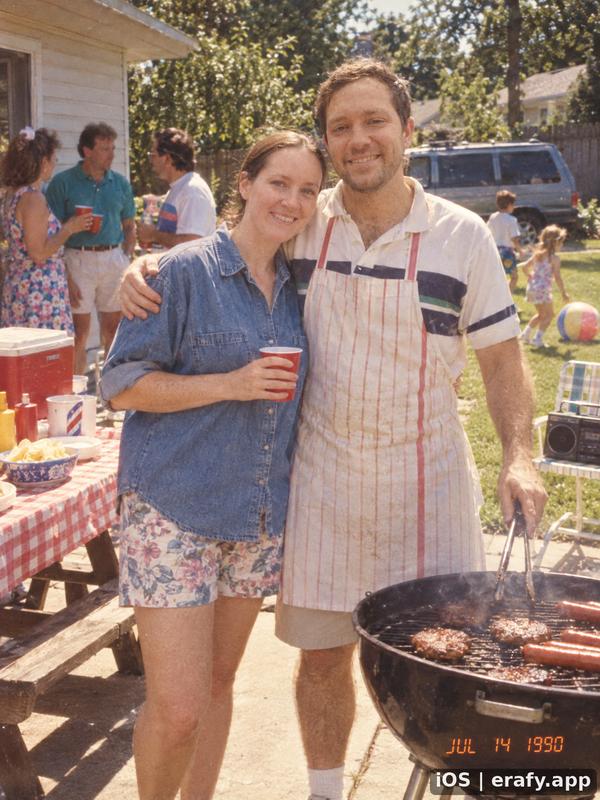 Couple · Barbecue
-
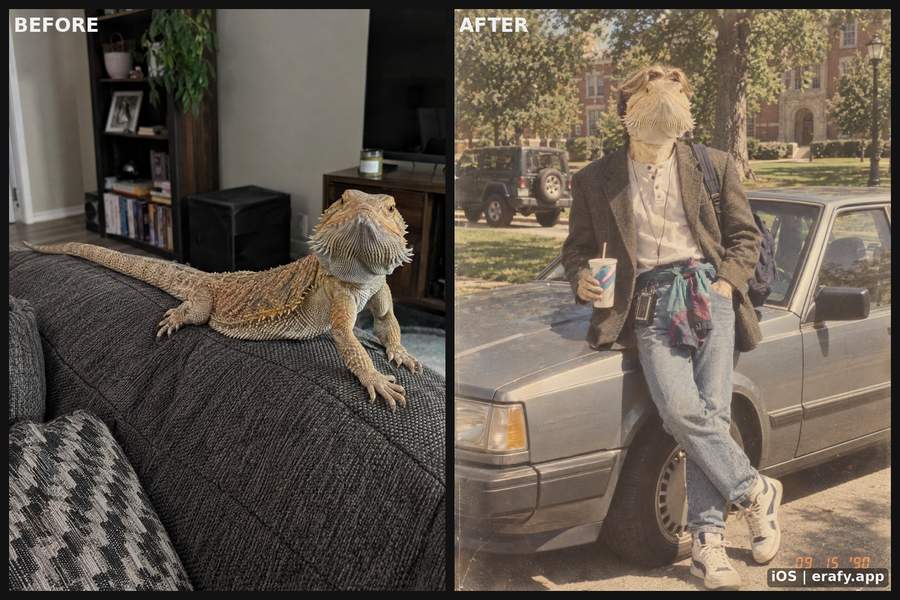


-
1990 · two seconds, silent
Other years
-
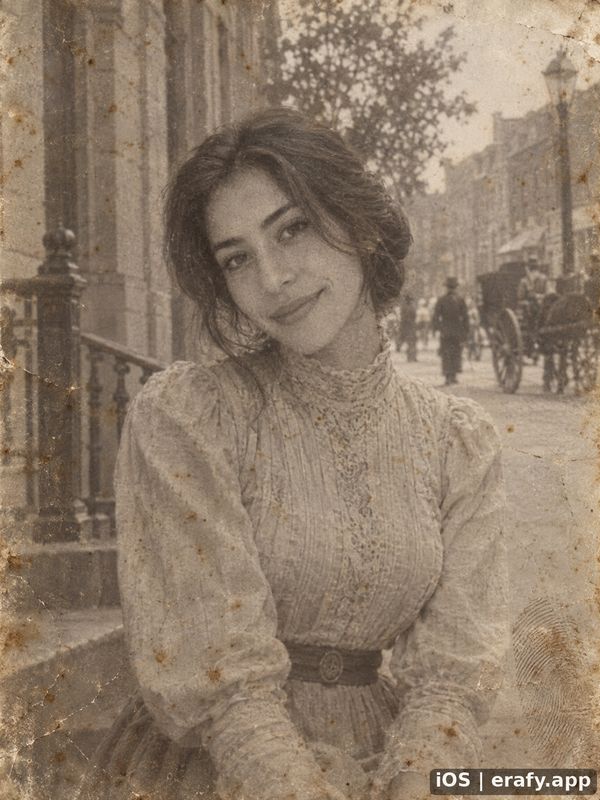 1900Early roll film, black and white
-
 1910Glass plates, film packs and early colour plates
-
 1920Orthochromatic black and white
-
 1930Roll-film snapshots
-
 1940Wartime black and white
-
 1950Black and white, and the first colour
-
 1960Colour slides and black and white
-
 1970Warm, faded colour film
-
 198035 mm colour, pocket cameras, flash
-
 2000Date stamps and the first digital cameras
-
 2010Early phone cameras
-
 2013Retro filter apps
-
 2016Phone portrait mode
-
 2019Night mode and ultrawide
-
 2022The modern phone camera
-
 2025Today's phones


Questions
Why do 1990s photos have an orange date in the corner?
Because many compact cameras of the early 1990s came with a quartz date back, which burnt the date into the corner of the frame as you took the picture, in orange or yellow seven-segment digits. It was a per-model option, so it was not on every camera, and disposable cameras never had it, but it is a strong sign of the period. In the early 1980s the same feature was rare.
Why do disposable camera photos from the 1990s look soft?
The single-use cameras of 1990 had a plastic fixed-focus lens with a single small aperture and a single shutter speed, loaded with fast ISO 400 film. In bright sun that gave a usable but slightly soft picture with dark corners and visible grain; indoors the small flash you charged by hand lit a hotspot in the middle, left everything past a few feet in the dark, and gave red eyes. Everything from about a metre away was equally in focus, so nothing stood out from its background. Better compacts of the day fired a red-eye-reduction pre-flash first; the disposable did not.
What would I look like in the 90s?
Erafy makes a new picture from your photo in the style of the year you pick, so how much it resembles you varies from one go to the next. It varies most in the black-and-white years and in the crafts before 1900, where faces are drawn in the craft's style. We make no promise about how any result will look.
