
Your photo as a 1950s snapshot
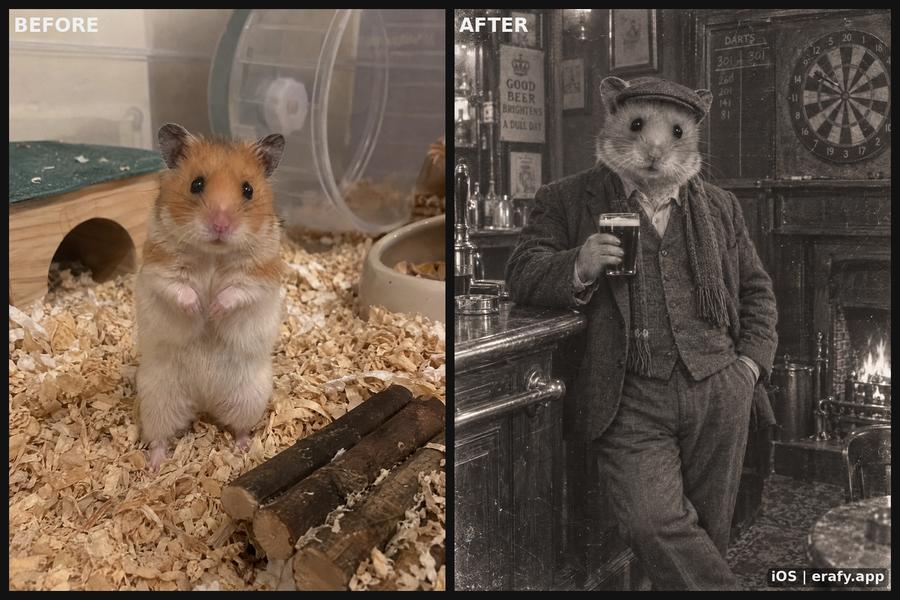
Pick a photo and the year 1950. Erafy makes a new snapshot from it, the kind a box camera took: small, square, and more often than not in black and white.

AI photo app · Free to download · iPhone · 18+

Nobody in the examples is a real person — the before photos are invented faces. These are our best results, not average ones. Sometimes AI can't handle it and modifies your face. All we can offer is a try.
How snapshots looked in the 1950s
In 1950 the family camera was a cheap box: a single fixed lens, one shutter speed, a square frame on roll film, a small bright finder you looked down into at the waist. Its film was blind to red, so skies came out near white, lips and sunburnt skin dark, a red dress close to black. The drugstore sent back small square prints with white borders, often deckle-edged.
Colour existed, but it cost several times as much and needed bright sun or a flashbulb, so it was saved for holidays and special occasions. A colour print of the time was warm, soft and low in saturation, and surviving prints have drifted orange and lost their cyan. Slides took the other route: deep saturated colour in a small cardboard mount, made for a projector.
Erafy's 1950 is mostly black and white. It picks a camera and film at random: a box-camera print, a flashbulb shot indoors with a hot face and a dark room, a sharper 35 mm frame, a colour print, a slide, or an instant print, still a novelty then, that developed in the hand in a minute. With Situation on, it also sets a scene: a soda fountain, a backyard barbecue, a family round the new television set.
Colour drew level with black and white over the 1960s.
More from the 50s
-
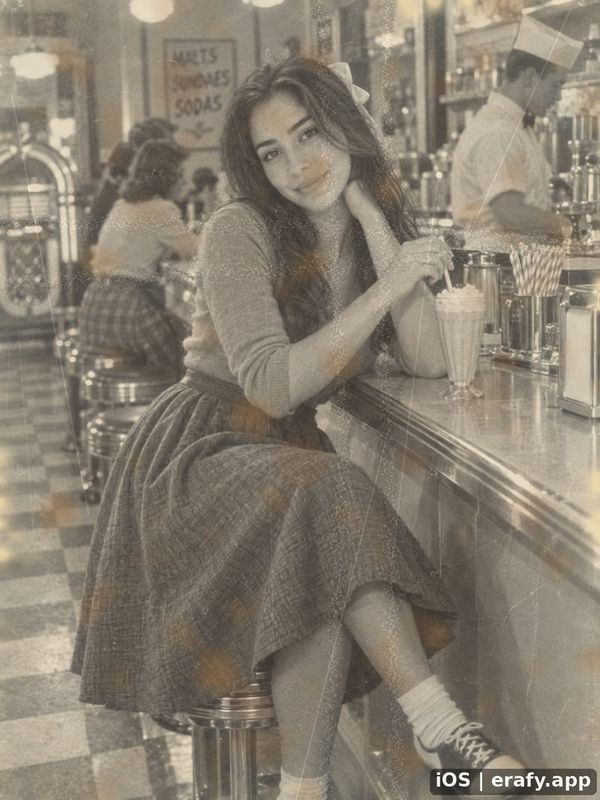 Diner
-
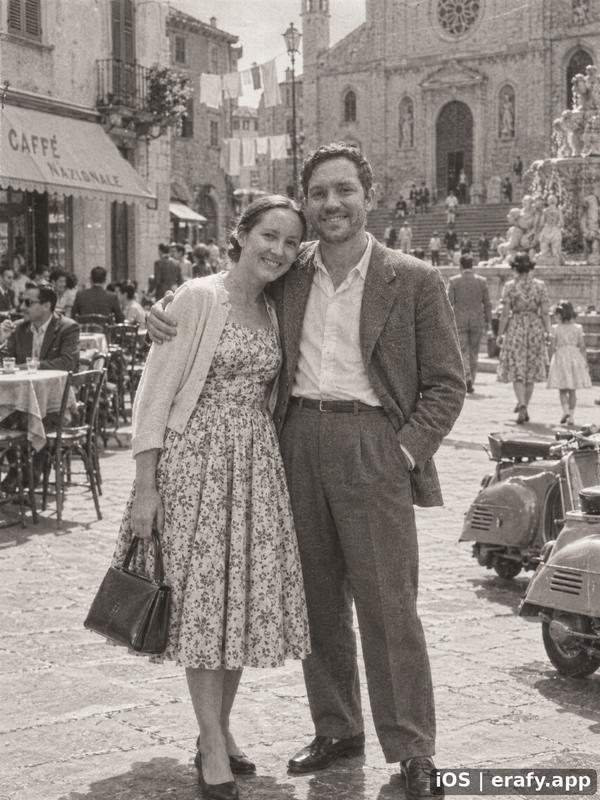 Couple · Piazza
-
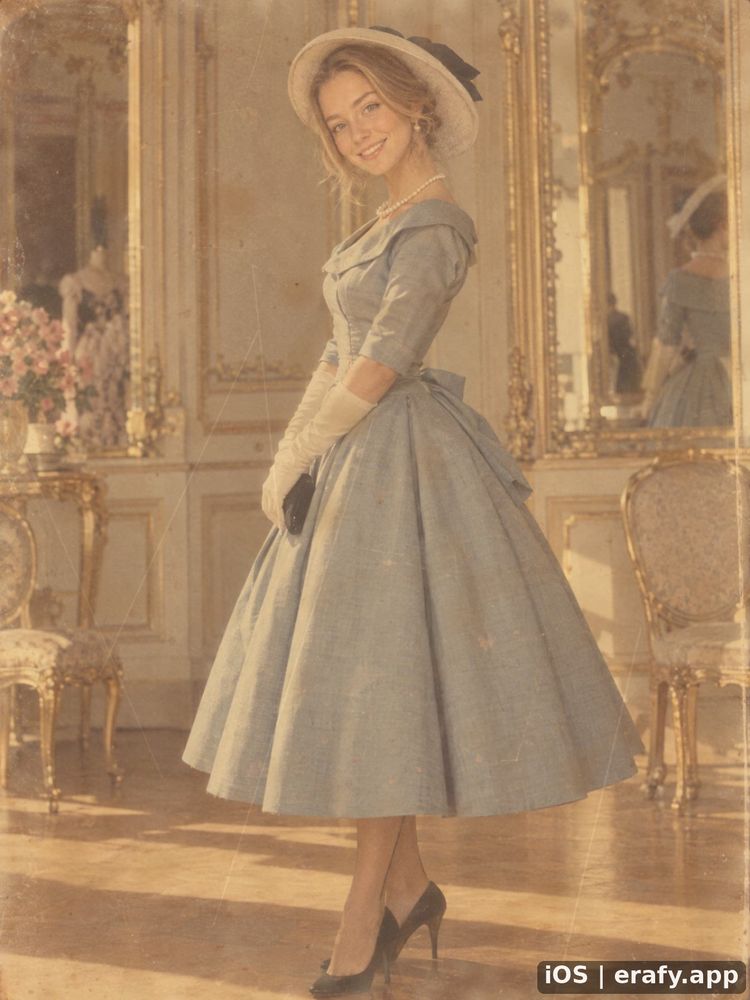 In the salon
-
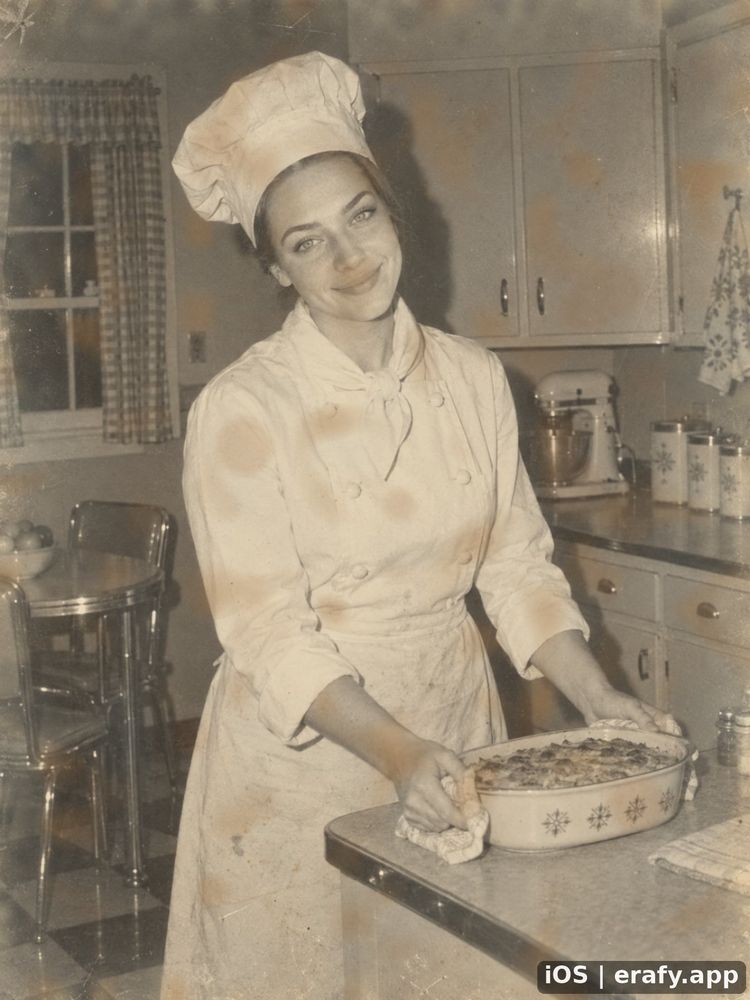 Chef look
-


-
1950 · two seconds, silent
Other years
-
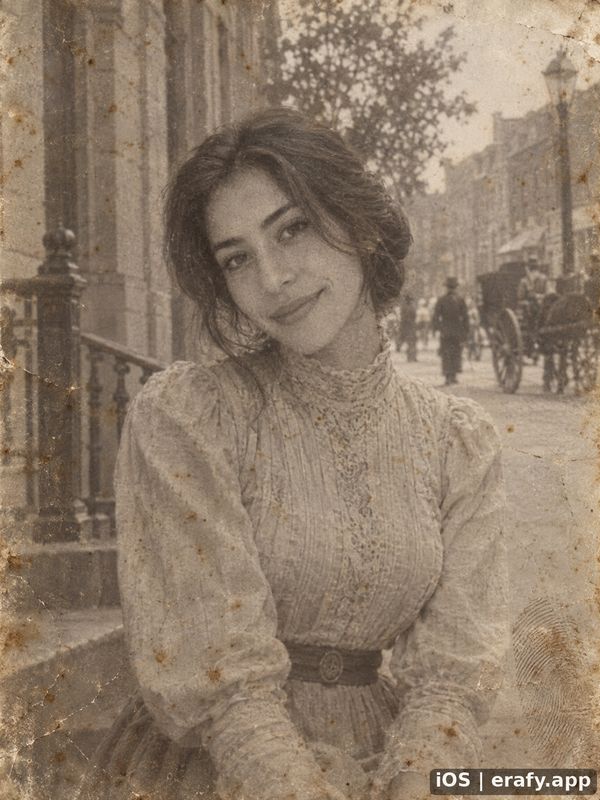 1900Early roll film, black and white
-
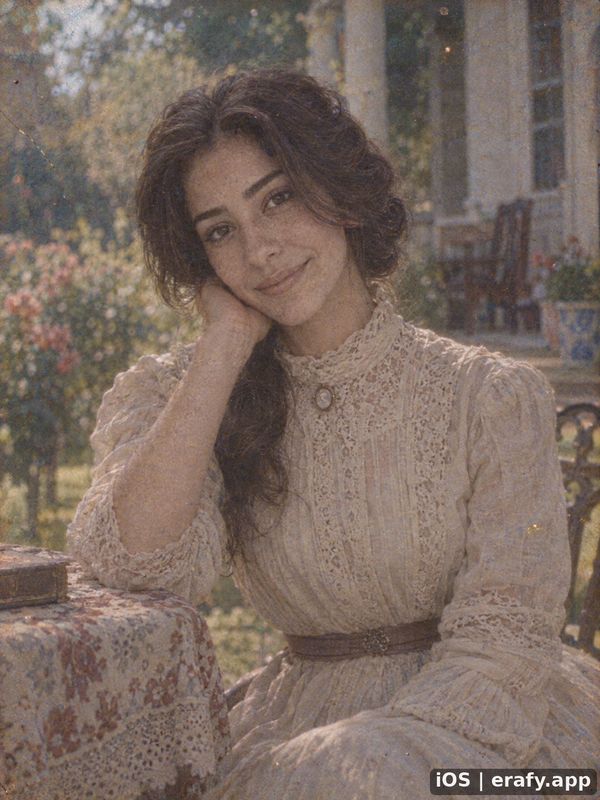 1910Glass plates, film packs and early colour plates
-
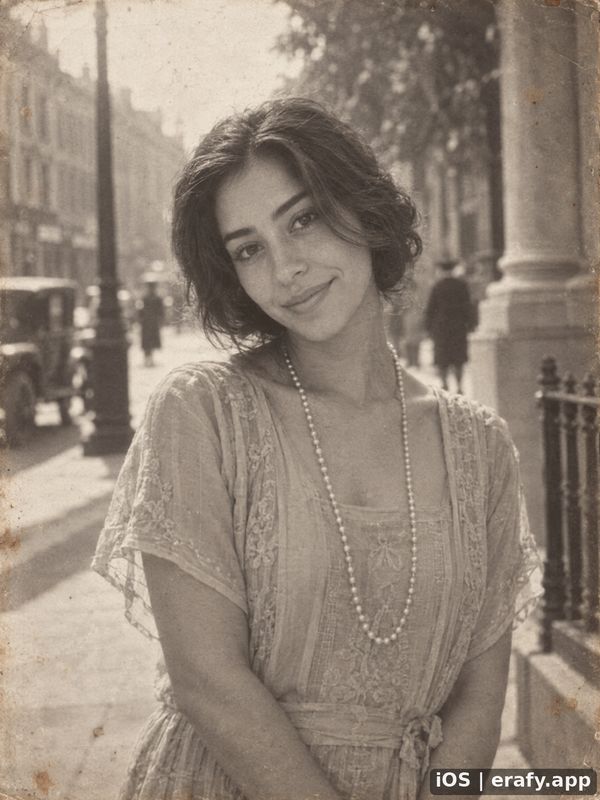 1920Orthochromatic black and white
-
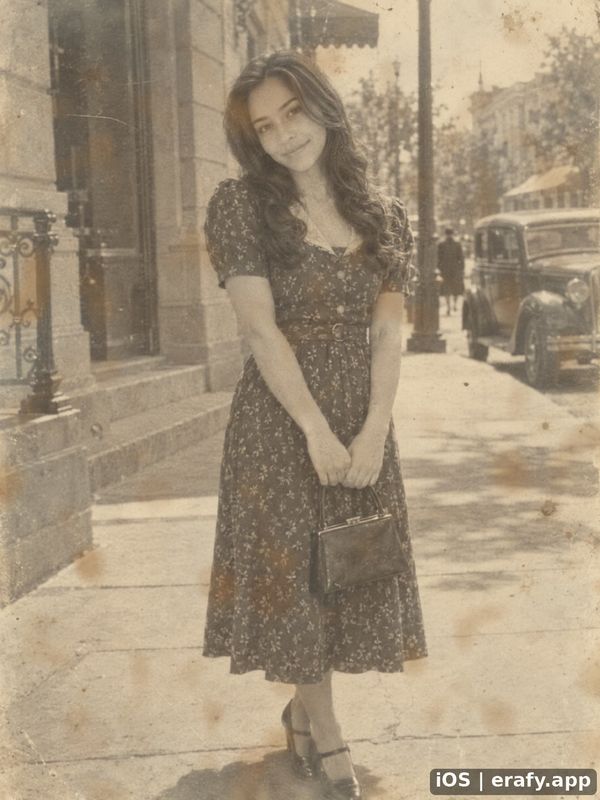 1930Roll-film snapshots
-
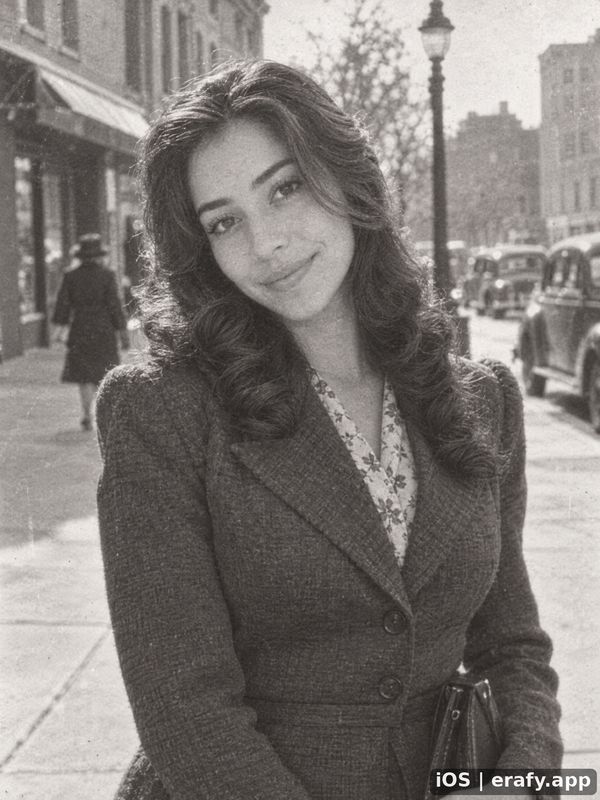 1940Wartime black and white
-
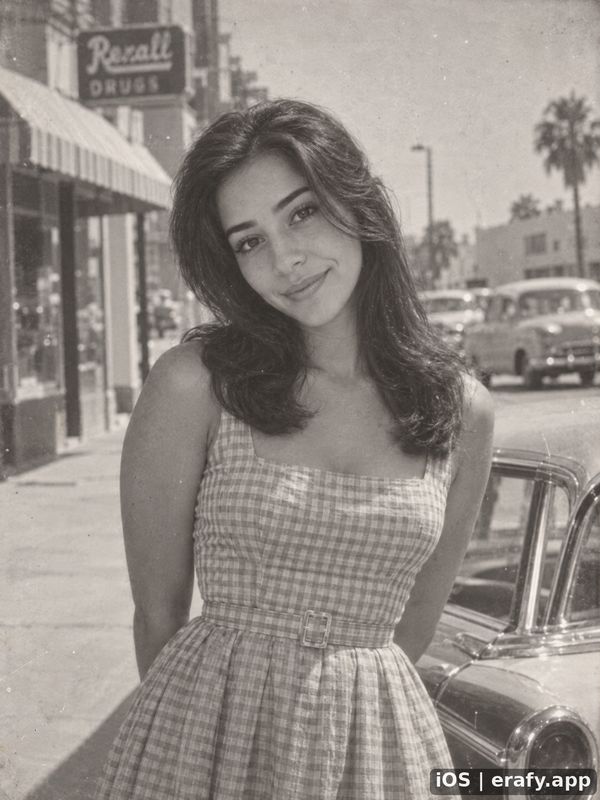 1960Colour slides and black and white
-
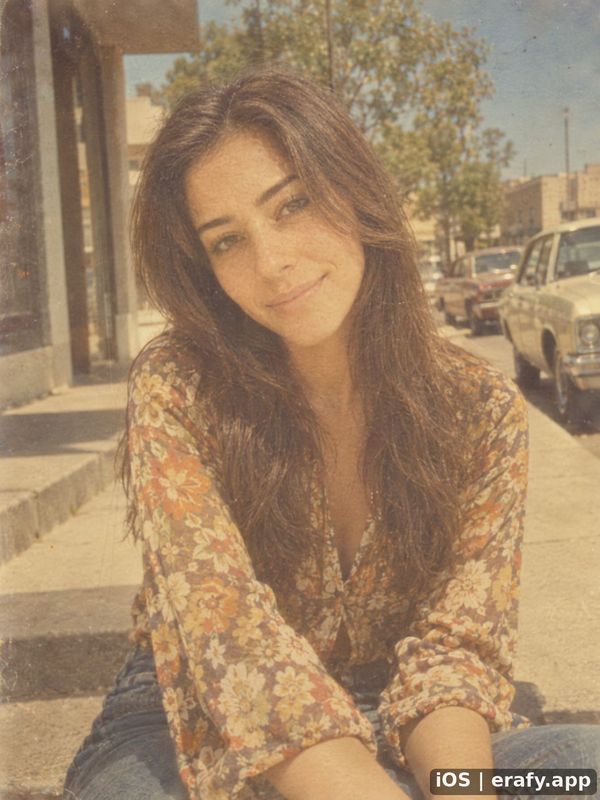 1970Warm, faded colour film
-
 198035 mm colour, pocket cameras, flash
-
 1990Drugstore colour film and disposables
-
 2000Date stamps and the first digital cameras
-
 2010Early phone cameras
-
 2013Retro filter apps
-
 2016Phone portrait mode
-
 2019Night mode and ultrawide
-
 2022The modern phone camera
-
 2025Today's phones


Questions
Were photos in colour in the 1950s?
Some were, but not many. In 1950 black and white was the norm. Colour film came as print film and as slide film, both slow, both costing several times as much, and both needing bright sun or flash, so families kept colour for holidays and special occasions. It did not become the everyday snapshot until around 1970.
Why do 1950s snapshots have white skies and dark lips?
The everyday roll film of the early 1950s was orthochromatic: sensitive to blue, green and yellow, blind to red. A blue sky recorded as almost white, while red lips, ruddy or sunburnt skin and red clothing recorded dark. The panchromatic films that hobbyists loaded into 35 mm cameras saw every colour, giving natural skin and a darker sky, which is why their pictures differ from the box-camera snapshots.
What would I look like in the 50s?
Erafy makes a new picture from your photo in the style of the year you pick, so how much it resembles you varies from one go to the next. It varies most in the black-and-white years and in the crafts before 1900, where faces are drawn in the craft's style. We make no promise about how any result will look.
